Exit Strategies: Consequences of Standardization in Designing for Escape and Freedom
DOI: https://doi.org/10.1145/3800645.3813072
DIS '26: Designing Interactive Systems Conference, Singapore, Singapore, June 2026
In schools, students are expected to perform obedience through routines which many find arbitrary and oppressive. Some students have sought an escape from these demands via virtual and hybrid schools. Drawing on ethnographic research, this work contributes understanding of how design can minimize control of diverse embodied experiences through emphasis on standardized outputs. Such a strategy lessens demands for assimilation, increasing a sense of freedom experienced by those who fall outside normative social categories. Yet, it also fails to fundamentally challenge underlying oppressive dynamics. This article weighs the harms and benefits of this translational approach for those seeking to navigate hostile institutions, arguing for designs that preserve autonomy but also actively offer support.
ACM Reference Format:
Anne Jonas. 2026. Exit Strategies: Consequences of Standardization in Designing for Escape and Freedom. In Designing Interactive Systems Conference (DIS '26), June 13--17, 2026, Singapore, Singapore. ACM, New York, NY, USA 15 Pages. https://doi.org/10.1145/3800645.3813072
1 Introduction
Children have long been subject to fine-grained social control in the school environments that take up a majority of their daily lives. Social scientist Paul Willis once wrote that “school is a kind of totalitarian regime” [114, p. 66]. Liam1, a gender fluid 14-year-old, echoed Willis's description as he disdainfully recalled that at his old school, teachers seemed to think of themselves as gods, expecting total obedience. Liam mimicked his former teacher: “You shall respect me! Spin on your head because I told you to.” He reflected of a time in which he got in trouble for texting, which was against classroom policy,
No, I'm not doing all that, I'm doing what I need to do. I am cooperating. I am behaving well, and I do my schoolwork. If I need to text my mom so that she doesn't have a panic attack, I'm going to do that... Chill!... They always just asked for so much that it was so obvious that they didn't even really want to teach you for the most part. They just wanted to control you.
As Liam's experience suggests, in many schools, academic learning often takes a backseat to the enforcement of established behavioral norms. In order to boost general student achievement schools often rely on standardized routines, such as banning cell-phone use, at scale, despite the fact that these routines may be counterproductive in individual cases.
Virtual and hybrid schools, however, claim to exert less control over the conditions students work under while translating their efforts into standardized data legible to the state and other institutions. This can provide an especially important reprieve for those who, like Liam, experience additional violence in traditional schools because they fall outside normative social categories or otherwise experience structural discrimination. Based on interviews across the U.S. and observations in several hybrid schools in U.S. Midwestern and Rust Belt locations, I find that certain forms of standardization facilitated by the design of online platforms allow students greater opportunities for agency and choice while pursuing their versions of educational success, but that students and families often pay the price of not seeing their authentic selves recognized or supported by their schools. This strategy lessens demands for assimilation, yet it also fails to fundamentally challenge underlying oppressive dynamics. In this paper, I weigh the harms and benefits of this translational approach for those seeking to navigate hostile institutions, arguing for designs that preserve autonomy but also actively offer support.
2 Background and Related Work
U.S. education policy has long heavily focused on quantified metrics of schooling such as standardized test scores, with varying effects [27, 28, 62, 72]. But the pressures exerted on educators to meet these goals extend a history of rigid routines within schools that exist to produce desired outcomes. These include fixed schedules, dividing students by age, sex, and assigned skill level, uniforms and dress codes, limited methods of engaging with educators and peers, and other forms of behavior management [12, 30, 41, 60, 61]. One often unspoken rationale for dominant practices in schooling is to reproduce established social categories, for example of docility and leadership or blue-collar vs. white-collar workers [114]. Schools also explicitly take on the role of performing behavioral interventions when children's practices are labeled as disruptive and/or pathological [54, 55]. The almost universally recognizable “grammar of schooling” [101] is so widely ingrained that it has contributed to dominant imagery of “school as factory” [1].
This standardization of schooling practices and repeated efforts at innovation and reform has not been without critiques [1, 101, 108, 109]. Despite these efforts, standardized quantifiable metrics upon which both students and schools are explicitly evaluated and granted resources and opportunities persist [13]. Enrollment and attendance largely determine how much funding schools receive, and test scores are often used to dole out additional resources and determine whether a school should remain open. The higher a student's GPA and scores on standardized tests, the greater access they often have to scholarships and educational institutions that can funnel them to stable and high-paying careers. In this paper, I argue that virtual and hybrid schools offer to break this yoking of an established normative process and a predictable product through datafication. They propose letting students attain equivalent outcomes without being subject to restrictive behavioral management.
The National Education Policy Center has closely followed virtual schooling in the U.S. for almost twenty-five years. As Molnar et al. [58] explain in their latest report,
Virtual education now takes many forms and serves many purposes. Formats include fulltime online K–12 schools... Some virtual education programs require students and teachers to be online at the same time (synchronous education); others allow students and teachers to visit online courses at their own convenience (asynchronous education). Others combine online work with in-person classroom instruction (blended instruction). Providers include public entities, nonprofit organizations, and for-profit companies.
As I have described in prior work [40], “I define ‘virtual’ or ‘online’ schools as educational organizations where the majority of instruction is computer-mediated." While students like Liam, mentioned in the Introduction, attend schools where they are required to be physically present for some period of time, their coursework takes place primarily online, thus, I consider them to fall within this definition, but also use the term “hybrid schools," to describe these specific learning environments [42]. Despite their variety, most virtual schools restrict the visibility of students, with limited use of video sharing even when classes are synchronous, one of the significant changes from traditional school patterns [25, 40]. This marks a substantial difference between emergency remote learning as frequently practiced due to the COVID-19 pandemic and schools designed for online instruction [25].
2.1 EdTech and Shadow Sectors
There has long been wide-spread skepticism about the purported promises of emerging educational technologies (“EdTech”) [1, 14, 19, 33, 84, 88]. Scholars in HCI, Education, and related areas have expressed immense concerns over the pervasive datafication of children's lives and the intensified surveillance that often accompanies this trend [46, 52, 105, 106]. In a society saturated with targeted advertising and media recommendations, critics of corporate educational technologies argue that the dominant “logic and promise” of educational technology mirrors that of extractive and adaptive commercial digital platforms [74]. Several scholars view the pervasive deployment of “algorithmic imaginaries” and “platform pedagogies” in the education space as an effort that will result in corporate technocratic expertise and priorities displacing the local governance of educators and public values [66, 74, 112, 113, 116]. Both the design of education technologies and the narratives surrounding them typically construct imagined users as “autodidacts,” minimizing the role of teachers and inscribing expected race, gender, and class positions for students [56]. While scholars recognize potential benefits to integrating digital technology into classrooms [71, 107] and using digital technologies to improve communication and collaboration between parents and teachers [40, 54, 115], many argue that the changes brought about are often either minimal [22] or largely detrimental to student learning and wellbeing as frequently implemented. Certainly, there has been overwhelming backlash to computer-facilitated remote learning since the beginning of the COVID-19 pandemic [64, 96, 111].
Despite this, a growing number of families are choosing schools where the majority of instruction takes place via online platforms. Even in the face of overwhelming reports of academic pitfalls from scholars, policymakers, and journalists [31, 36, 44, 75, 79, 89], virtual school enrollment has been rising at a rapid clip since before the pandemic [59]. Assuming that parents and students are not simply being tricked into these choices, how can we reconcile the established failures of virtual schooling, with the fact that many consider it a better option than their in-person school choices? As Tuck et al. [100] argue of youth who have taken alternative education pathways, “research means refusing to accept analyses that paint us as lazy, crazy, or stupid.” They argue for understanding the General Educational Development (GED) credential “as both a gateway to higher education and employment, and as a get away from dehumanizing high schools” [100, p. 53]. What is often perceived as a low-value credential serves a practical purpose for youth who have been pushed out of schools by racism, colonialism, ableism, and other oppressive structures. In the higher education space, McMillan Cottom [57] points out that many students are drawn to for-profit colleges, despite taking on high levels of debt for programs that are often accessible at low-cost community colleges, because these institutions meet their day-to-day needs. Within sociotechnical educational systems, educators and students consistently negotiate their current conditions, enacting practices of care and creativity alongside those of control and hostility [15, 40, 41, 51]. I follow these scholars in exploring the attractions of virtual and hybrid schooling despite its bad reputation, and the implications of its proliferation for digital design.
2.2 Against ‘One Size Fits All’: Virtual and Hybrid Schools and the Promise of Flexibility
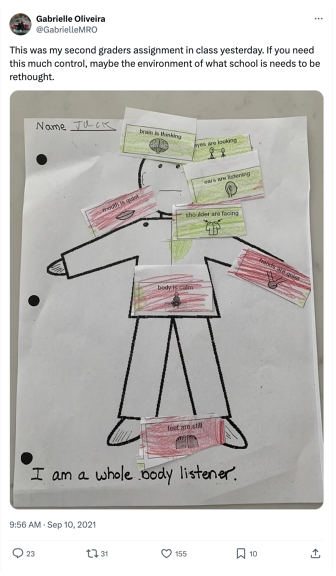
The rise of virtual and hybrid schooling, like other EdTech projects, responds to a “social imaginary that school is a stultifying institution virtually unchanged for well over one hundred years,” a popular belief in the idea of “school as factory” [1, p. 36]. This perception has some basis in descriptions of schooling that emphasize immense control over students, limited autonomy, and the strict and homogeneous patterns they are expected to follow. The architecture and regulations of school life contribute to the “hidden curriculum,” a set of “informal messages about personal conduct” that “shapes attitudes and behaviors for the working world outside school,” [33, p. 124]. Schools discipline students, implicitly and explicitly, to perform characteristics associated with dominant cultural values under the premise that this will help them be successful in a society that rewards those ways of being, known as cultural capital[8]. More explicitly, many see these regulations as creating an environment for academic success. Yet others interpret these conditions as violent suppression of diversity and creativity which strangle challenges to the status quo. For example, Education scholar Gabrielle Oliveira once tweeted a photo of a child's assignment that mandated being physically still, silent, and oriented towards the teacher as appropriate classroom behavior with a focus on listening, placing authority solely with the educator [63] (Figure 1, published with Dr. Oliveira's permission).
The situation can be even worse for those who are the targets of pervasive social oppression. Black students, for example, are disproportionately accused of disciplinary infractions, including under vague characterizations such as “defiance.” Morris points out that many cases where Black girls get into trouble with school officials for having an “attitude” are in fact “provoked by incidents of disrespect” by teachers and peers [61, p. 86]. She argues that educators are often unfamiliar with or unwilling to consider patterns of systemic violence in these girls’ lives that contribute to their reactions. Education scholars further highlight the absurdity of expecting equivalent results in student “achievement” given the vastly unequal barriers and opportunities afforded to students [13]. This is true in terms of wealth and the privileges and protections it affords (e.g., quality of school buildings, student teacher ratio, availability of easy transportation, amenities and activities), who is seen as the “right” student, whose language and culture is valued, who teachers are nice to, who they let bend the rules, and who is most likely to experience school closure. Here the supposedly universal standards of behavior and achievement fail to consider diverse lived realities and students pay the price.
Of course, schools are not factories. As Ames documents, such a popular and misleading frame “erases the skill of teachers, the humanity of students, and the agency of all involved behind the dystopian connotations of automation and assembly lines” [1, p. 36]. EdTech critic Audrey Watters [108] emphasizes that schooling in the U.S. is “largely decentralized,” and that in practice, “they don't really look like and they really don't work like factories.” Further, even factories do not completely foreclose opportunities for creativity, agency, and variation. As anthropologist Lucy Suchman [95] argues, all human action involves using the available resources at hand in ways that can never be fully specified in advance or in retrospect. No matter how standardized a system is, as long as it is not completely self-contained, it can never totally control behavior or squelch difference.
Yet despite these convincing reasons to approach the school – factory equivalence with skepticism, there remains a kernel of truth in the analogy that may be generative. For students who seek out virtual and hybrid schooling, a primary attraction is to escape the level of control traditional schools exert over their autonomy while retaining access to the benefits of public schooling. One way this is accomplished in many virtual and hybrid schools is simply by limiting the visibility of students bodies while they learn [25, 40]. Virtual school marketing also draws heavily on the idea that virtual schooling can be “personalized” in ways difficult to achieve in traditional schools. For example, Stride K12, one of the largest providers of virtual school platforms, curriculum, and teachers, makes the case for their model by arguing that it offers “education options that allow families to fit learning into their lifestyle and customize the experience to their student's distinct needs,” because “[e]ducation shouldn't take a one-size-fits-all approach” [94]. The logic here is that schools have been traditionally designed to serve those at the statistical norm while excluding or disadvantaging those at the margins [76], but that new technologies can expand schooling to be more inclusive. “Personalized learning” is a term with enormous cache in discourse about education reform, but one that is hard to pin down [9, 65]. The growth of machine learning algorithms and digital content delivery has revitalized a growing interest in the concept among funders, policymakers, parents, and educators. Personalized learning is championed as an option to more efficiently provide support for a diverse range of students [18]. But the ambiguity of the phrase allows virtual and hybrid schools to position themselves as spaces of personalized learning without clearly defining how they enact customization. These schools sell the concept of flexibility as a solution to a range of students who feel that their needs have not been met in traditional school environments [43].
Many of these dynamics also appear in the realm of "gig economy" mediated by digital platforms. Gray and Suri [32] argue that workers often turn to digital piece-work out of a dual sense of hope and desperation. Despite the burdens workers face and their limited options, their new roles “gave them some semblance of control over their time, work environment, and what they took on and valued as ‘meaningful work’” (p.96) and a way to “balance commitments” (p.110) in societies stingy with public support. Gray & Suri take seriously those advantages while remaining attuned to the exploitative nature of this work. Similarly, Sannon and Cosley [77], Ma et al. [53], and Zyskowski et al. [117] highlight that gig work both provides access to expanded labor opportunities for migrants and people with disabilities, particularly due to flexibility and variability around hours, location, social interaction, low barrier to entry, and amount of effort required, but also comes with challenges around inaccessibility and the lack of disability recognition in algorithmic management, opacity around work conditions of particular tasks, intensive surveillance, and the need for additional physical, logistical, and emotional labor, often invisible to customers and platforms, to protect themselves and manage their workload. Meanwhile, Jack [39] illustrates how hybrid forms of creative and knowledge work afford workers opportunities to participate in place-based collective projects outside the demands of paid labor. These scholars have clearly established that the benefits of flexibility granted by digital platforms can be very real - and that they can also come with a variety of social costs.
2.3 Datafication, Productivity, and Ambivalence: HCI Approaches
HCI scholarship frequently includes a central theme of ambivalence, which this paper continues, around the role of datafication and related standardization in advancing social justice goals. In response to impulses within HCI and related communities to harness newly ubiquitous personal data production for empowerment, many studies have shown the pitfalls of relying on data alone for holistic understanding and advocacy [45, 67] and resistance to datafication practices, particularly those that enable intrusive surveillance [92]. Wang and colleagues describe children's mixed feelings towards datafication, particularly their reticence to share what they consider "personal" or data not needed to directly power the functionality of digital services or to improve their experience [105], and explore the centrality of respect and autonomy in both children's and parents’ perceptions of how datafication practices should be crafted [104, 106]. Tran and DiSalvo [98] argue that in order for datafication projects to effectively serve advocacy goals, they should focus on process over end products. Horgan and Dourish [37] explore micro techniques of ambivalent data actors who must reconcile radical intent and bureaucratic and institutional rigidity and resistance to change. Chen, Sun, and Lindtner [17] highlight how everyday people are responsible for keeping China's datafication systems afloat through both affective and technical work despite the restrictions placed on them by the state, challenging assumptions about hegemonic forms of control. Their argument demonstrates how people can simultaneously work to further centralized power while also creating distributed systems of local care that cannot be constrained by that power. This study takes up many of these concerns, including fundamentally how people both support and resist oppressive social systems through projects of datafication and standardization.
Crooks [20] further explores how datafication can create new gaps in surveillance, generating ambivalent and positive reactions by those whose actions are represented due to the protection of what is not captured. While the field of HCI generally focuses on the essential nature of deeply understanding the nuances of human experiences, particularly when designers and researchers share substantially different lifeworlds than intended users or research participants, many recent critiques have also emphasized the shortcomings of a focus on empathy and universalized design methods [6, 38, 91]. As this paper will illustrate, sometimes people want to limit what they share about their specific experiences because they recognize how their differences from dominant or normative practices may be used against them. While in many of the HCI cases cited above, datafication appears to reveal more personal information than prior alternatives, in this case, datafication becomes one way to accomplish goals of relative privacy and autonomy.
More broadly, Lin and Lindtner [49] lay out how the field of HCI continues to be structured around values of productivity that generate ongoing forms of violence, exploitation, and insecurity. They illustrate how HCI perpetuates utilitarian frameworks where, for example, “Schools and education from the 17th way into the 19th century were organized as ‘intellectual and moral engines’ to produce able bodies and minds. This transformation of the ‘idle body’ and redirecting it towards ‘useful ends’ was framed as a social problem and the elimination of uselessness as producing positive effects and as a moral obligation.” Like education, technology design here is oriented towards taking the raw materials of “potential” people are seen to possess and turning it into “something useful.” In this paper, I explore how datafication plays a role in meeting these same ends as educational platforms evolve.
3 Methods
This paper draws on data from a broader ethnographically-informed study involving in-depth interviews with 78 participants in 14 virtual and hybrid K-12 schools in 10 U.S. states, supplemented by over 100 hours in-person and online participant observation at hybrid U.S. schools and relevant EdTech industry events throughout 2018-2020 and 2022-2024. My goal in this process was to understand the landscape of virtual and hybrid schools in the U.S., identify significant elements that influence community member experiences, and to trace the processes of engagement with virtual and hybrid schools that produce different sets of risks and rewards. The bulk of data in this study is from open-ended, semi-structured interviews with 42 teachers and staff, 11 parents, and 20 students, as well as 5 policymakers and community advocates who focus on the broader landscape influencing virtual schooling, and observations of meetings, classes, news reports, and industry events. This article focuses specifically on students, parents, and staff at public virtual or hybrid schools.
My research follows interpretivist scholarship in HCI in rejecting positivist claims of discovering objective truth or producing “systematic or universal accounts of culture” in favor of “detailed, particular, and specific — thick — accounts of social life that could bring previously disconnected communities into legibility and understanding” [90]. Following Soden, Toombs, and Thomas [90], I have resisted the inclusion of a table of study participants or the listing of standard demographic criteria. Instead, I have tried to highlight the roles each participant has within the virtual and hybrid school landscape that may most directly influence their perspective in this analytical context. Determining how my own social position may have influenced data collection and analysis, and how to frame that for a scholarly audience, is complex [48], and a thorough examination of my reflexivity is beyond the scope of this paper. However, I believe that my position as a queer white woman affiliated with an elite university and as someone who graduated from and was academically successful at urban in-person U.S. K-12 public schools contributed to how I approached this study and at times how I was received by participants.
3.1 Sampling and Recruitment
This research involved a continually emergent process to determine what a field-site should look like under distributed conditions, drawing on the insights of Burrell's [10] “The Field Site as Network.” I recruited interview participants through a combination of purposive and snowball sampling [73], seeking out teachers, students, parents, administrators, policymakers, and community advocates with diverse perspectives, positions, and backgrounds at different “kinds” of schools – neighborhood public, charter, private, and homeschools, in different geographic locations, with varying demographics, pedagogical approaches, organizational structures, and missions. This strategy was “aimed toward theory construction, not for population representativeness” [16, p.6] – I sought out extreme or unusual cases as much as those that might represent a “typical” experience. This focus on sampling for range or diversity was complemented by snowball sampling, which allowed for a deeper understanding of the relationships and circumstances within particular school communities.
I identified potential participants via online school websites, news stories, conference speakers and attendees, social media posts, and personal connections. My typical procedure was to message potential participants with a brief introduction of the project and ask if they would be interested in doing an interview. At schools where I observed, I paired a general invitation sent out to all staff as part of my observation process with individual appeals when I spoke with people at the site.
3.2 Interviews
Interviews ranged from approximately 30 minutes to over two hours, with some follow-up interviews to ask for clarification or updates from participants. Many interviews happened online, over Zoom or Skype, during which participants had the option to turn on their video or have the interview be audio only. Most interviews with those where observation fieldwork was conducted were done in-person, either in the school building or in a public place, usually a coffee shop. Audio recordings of interviews were transcribed by a combination of the researcher, professional services, and automated platforms with corrections by the researcher. All interviewees were provided with informed consent documents ahead of the interview, and I began each interview by reminding interviewees that they could skip any question, stop at any time, and asking their permission to record.
The interview guide included a brief introduction of the project, a chance for participants to ask questions, and broad areas of interest including the circumstances of their initial interaction with virtual or hybrid schools and their motivations for pursuing that option, things they liked about their school and challenges they had there, how their virtual or hybrid school experience had changed over time, who they thought virtual and hybrid schools were best and worst for, and what their daily experiences with schooling were like. My investigation focused both on how the virtual school system “works or fails to work” [110, p10] and on understanding the perspectives and experiences of those engaged with that system. To the extent possible, I let interviewees “speak freely in their own terms” about their experiences [50, p85]. The open-endedness of my questions, followed by probes regarding the language and themes raised by interviewees, allowed for unexpected outcomes [5], while having a general guide of topics of interest allowed me to compare experiences and provided an initial framework for coding and analysis [24, 97].
3.3 Observations
In order to understand participants’ experiences within the social, physical, digital, and institutional contexts in which they operate, I supplemented my interviews with observations of people engaged in the practices of virtual schooling and the process of creating, learning, and managing virtual and hybrid schools and their attendant concepts, such as personalized learning. Throughout this fieldwork, I took field-notes to provide “thick description” of events and written memos about my experiences, conversations, perceptions, and emerging understandings [50, 73]. This kind of ethnographic observation creates opportunities to recognize that which is taken for granted by participants, the infrastructure of their experiences that is so familiar that it is difficult or impossible to name its influence. It also enables researchers to make comparisons between what participants say and what they do.
I first observed the actual process of schooling at a hybrid city-wide charter school in a large Midwestern city in Fall of 2018 and continued to visit in-person periodically throughout the 2018-2019 school year. Observations in the physical building included time spent in the teachers’ lounge, the front office, school board meetings (on Zoom and in-person), professional development activities / trainings, and administrative meetings. In these spaces, I introduced myself and spoke informally with teachers and staff. I witnessed both “official” behaviors, such as discussions of strategic planning or reviewing student data, and informal conversations between colleagues. In addition to spending time at the school's physical site, where I also conducted interviews with staff and accompanied teachers in monitoring the hallway and setting up their classroom, I also spent time with two teachers while they were teaching from their homes, for about four hours each. Another teacher shared with me videos from one day of his classes. I estimate my total time observing in-person at that school at around 60 hours.
During this period, from 2018-2020, I also attended several conferences targeted towards educators, administrators, and EdTech designers focused on virtual and personalized learning, and remotely attended several local school board meetings in a city making a decision about whether to permit an online charter school. Further, I took note of and saved stories from local and national news media that related to these topics to establish popular perceptions and track evolving developments around particular virtual schools and education technology providers. These documents helped me identify dominant narratives, locate varied perspectives, and triangulate my findings throughout my research process.
Over the course of the 2022-2023 and 2023-2024 school years, I conducted observations in another hybrid school, in a mid-sized Rust Belt city, on approximately 65 days. This hybrid school was one of several run by the local public school district and was located in one room of a community LGBTQ center, which provided some supplemental programming for enrolled students as well as its own community offerings. I generally sat with students at the school while they worked on their laptops, sometimes watching over their shoulders (with permission). I also joined in on several in-person school field trips and activities (such as sexual education workshops, career and college fairs, prom, graduation) and virtual staff meetings. I also provided occasional tutoring to students and explored the school's digital platform through a guest account created by the classroom teacher - reading instructional text, watching course videos, and taking quizzes. I would speak informally with students and teachers about daily events, including asking students to reflect on their interpretations of particular interactions and dynamics, and would sometimes be included by students and educators in their social and professional conversations. During each session, I would record fieldnotes [26] with general happenings, school routines, various technologies used, and my perceptions of the emotions and social dynamics at play. Participants were all introduced to me and my project and made aware that I was taking notes and that they could ask me to stop at any time.
3.4 Analysis
Data was analyzed through a combination of inductive and abductive coding and memoing techniques [24, 26, 50, 97]. I have combined the coding approach associated with grounded theory [16], which begins with close line by line analysis of the data, with the flexible coding approach recommended for semi-structured interview studies that begins with broad “index” codes based in the interview protocol and then focuses in as the “main ‘stories’ in the data” begin to emerge through cross-case analysis between interviews [24, 97]. I identified themes of flexibility, autonomy, and both the negative and positive aspects of social ties by beginning with the empirical data, while an emphasis on what value virtual and hybrid schools provide and disentangling who they do and do not serve well were index codes drawn from my interview guide. Incorporating both strategies allowed me to privilege both what Deterding and Waters [24] state is the goal of grounded theory, to allow for “surprising results and phenomena to emerge” and the “cumulative theory building” that expands on existing literature. In order to interpret the data and construct my claims, I moved between coding to writing provisional accounts of the social phenomenon at play - here, how standardization both advanced and worked against social justice goals for virtual school participants - returning regularly to the data to explore the context of relevant quotes and seek out instances that could challenge my nascent understanding.
4 Findings: The Value of Virtual and Hybrid Schools
Participants regularly describe virtual and hybrid schooling as appealing because it accommodates a wide array of needs, desires, and constraints. Due to longstanding underfunding and structural biases, traditional public schools operate such that many students, as well as teachers and families, find their needs, identities, and desires denigrated or ignored. Some beneficiaries of virtual and hybrid schooling listed in interviews and promotional materials include: students whose families object to mainstream schools for religious reasons or want to attend intensive religious programs, elite athletes, those with chronic illness, professional performers, those in rural or isolated areas, those who fear or have experienced bullying, school shootings, or gang-based violence in their neighborhoods, teen parents, Autistic and other neurodivergent students, those with “behavioral issues,” those working at a level above or below the academic norm for their age group, and those whose parents are in the military or otherwise have reason to travel or move frequently.
However, by and large, virtual and hybrid school programs are not targeted to particular groups. With rare exceptions, they do not address the underlying conditions that bring people to their digital doors. There is little adaptation to incorporate the specificity of participants’ lives. Instead, virtual and hybrid schools offer a platform for translating these diverse conditions of educational production into standardized outputs that show no trace of their varied origins. This transformation requires individuals to take on responsibilities for education that were once imagined as collective and public, but in exchange, relinquishes demands for alignment with dominant norms. As the following vignette from my fieldnotes illustrates, for many, this is a worthwhile proposition.
Lisa calls in to our interview while driving home with her daughter Sarah. They are enthusiastic: “I'm excited for your project, because we're believers in virtual schools!” Lisa recalls her experience about twenty years ago, when Sarah was adopted and came to the U.S. from China. Throughout her early childhood, Sarah experienced what Lisa calls “developmental challenges,” such as trouble reading and social difficulties. Sarah's school focused only on her behaviors, not what might be behind them or what interventions might help. Lisa appealed to the school to provide Sarah with services, but instead, they responded with disciplinary proceedings and eventually tried to convince Lisa that her daughter should be sent to a behavioral institution. Lisa resisted, horrified at what she saw in those programs:
They call it therapeutic supports, but there's no actual therapy going on there... they're not schools, per se. So, they are not held to the school standards of monitoring curriculum. Nobody monitors the graduation rate. When the state's office of accountability actually went in and tried to piece together data on graduation rates... only 9 percent of the population in those systems were graduating.... nobody monitors what's happening there!... they had restraints, and they had seclusion... all kinds of things that I knew were going to just escalate her behavior.
But the school continued to insist. As Lisa remembers, “they basically wanted her to try and fail at that place before they would consider something else. And I wasn't willing to let her do that.” After an uphill court battle, Sarah's family lost their case. Lisa quit work to stay home with 10-year-old Sarah, and as she tells me, “We kind of did our own thing for a year, sort of haphazardly.” Then, Lisa saw a post on Facebook about a new option in the state – a virtual charter school. She jumped at the opportunity: “We walked through the door saying we want in.” Sarah remained enrolled in the virtual school until her high school graduation.
4.1 Temporal Control and Physical Autonomy
Many imagine that online personalized learning involves algorithmically adaptive curriculum, adjusting to a student's demonstrated strengths and weaknesses [9]. Yet for many, the reality of “personalized learning” in virtual and hybrid schools is that it is easier to pick and choose when and where they learn, who and what they interact with while in school, and the pace at which their formal education happens.
Lizzie, a licensed teacher and parent of former students at the hybrid school where she worked, told me that her daughter appreciated that her schooling “seemed very individualized.” She chafed against the micromanagement of traditional schools:
It was also nice that she could choose the subjects that she wanted to begin her day with, end her day with, there was some flexibility there in the scheduling which was really beneficial for her... Any areas that she really got invested in, or really interested in, nobody was there to stop her. There was always an opportunity to dig deeper... I think that often, in a traditional brick-and-mortar school, you have that factor of time and you're beholden to the schedule, and to what the state recommends that you learn minute wise, and content wise, rather than what... the student is interested in.
Lizzie felt that by determining the structure of their day and being able to expand on what they were learning by themselves, her children were strengthening their ability to learn on their own, rather than relying on external structures like class periods and school bells.
In addition to building meta-cognitive skills, many participants argued that virtual or hybrid school was a good fit for students whose learning needs fell substantially outside the “norm,” whether that meant progressing more slowly or more quickly than average. In virtual and hybrid schools, there generally remains a prescriptive standard for how far a student is supposed to progress over the course of a year or even a week. But for many families, this was enough to make a tangible difference in their lives compared to the typical school regular deadlines and timing of instruction. Andrew, a high-school social studies teacher at a virtual school, emphasized the advantages of this system for students with disabilities. He explained, “The way the school was set up, we met most IEP [Individualized Education Plan] concerns just by the way that we did it [by default]. If you needed extra time, kind of the burden was on you, to make that extra time.” This was in contrast to traditional schools, where accommodations for students with disabilities meant that the school had to make exceptions to their usual standards, for example by providing students with extra time to complete an exam. Lisa gave an example of the usefulness of temporal and physical control for Sarah:
because she does have a slower processing speed... sometimes a new concept she doesn't get right off the bat. Especially in math, which happens to be one of her best subjects, the math was getting more difficult, and she wouldn't get it the first time, but she knew she could watch the recording over and over again. So even if it hit a point where she became emotionally frustrated, she was like, well, I just shut the class off, and I'll go back... And then she would just go back and watch, and re-watch, and figure things out on her own... she didn't have to have an outburst, because nobody was trying to make her pay attention when she was overwhelmed. And she could go back and... [not feel] oh, I'm embarrassed because I had to step out because it was too much for me.
The idea that Sarah's behaviors were disrupting the classroom, which had loomed so large over her in-person school experience, did not come into play when she could control when she worked, for how long, and her physical actions during that time, as she was no longer held to the traditional school's behavioral standards.
Meaningfully, these adjustments occur outside the purview of school or peer oversight. Students who take more or less time working with curricular material are ultimately equivalent in the eyes of the institution. As Naomi, a school counselor at a virtual school, put it,
there are way more non-traditional students than there have ever been in the past... everyone is different... we don't have a right to their story... we can be accessible to everyone, we don't have to know their individual situation to be able to offer them what's going to work for them.
Here, allowing students and families to control their experience provided them privacy. By lifting restrictions on the process of education, many different needs could be accommodated. Students need not go through the difficult and stigmatizing process of receiving a disability diagnosis or sharing extenuating family circumstances. They could make things work on their own time, in their own space, whatever that looked like for them.
4.2 Removing the Social
While the impetus for students to “catch up” can be externally imposed – necessary credits to graduate, the threat of being held back and having to repeat a grade level – moving ahead is framed as important because it prevents students from becoming bored and dissatisfied with school. Sophie, a parent, recalled how in high school, standardized instruction interfered with her ability to process:
If you're direct and clear, I will get the concept fairly quickly, but what would make it a drag for me is when the teacher would have to go over the same concept over and over again … and then I was just checked out.
In her teenage son's virtual school, self-pacing meant that she did not have to worry about him being dragged down by the needs of others, whether that meant skipping repetitive explanations or additional time with difficult material.
The idea that some students are held back by a system that focuses on the “average student” is pervasive in discussions around virtual and hybrid schools. Many spoke glowingly about the opportunities for children to “accelerate.” For some, completing as many classes as possible, as quickly as possible, was a normative good. David, a middle-school math teacher at a city-wide hybrid school, said, “some of my better students, they get the curriculum, and they just fly! They go as fast as they want.” Another teacher at the same location, Ruth, similarly explained, “If you're a gifted kid, school – regular school – generally goes too slow... I have a kid now... [who is] doing two years of science in one year. Because he doesn't have to wait for the rest of the class to catch up.”
Beyond perceiving their peers as weighing down “gifted” students, many students experienced others as a direct threat. Escaping physical and psychological violence is a common rationale for choosing virtual and hybrid schools. David painted a stark picture of virtual school as the only hope for connection beyond the domestic sphere for those in “bad neighborhoods”: “a lot of the kids that I teach don't leave their house.” School counselor Gail, also at the same hybrid school, shared something one student's mother had told her: “I don't care if my kid's not doing work. She is not going to the local school because kids get shot and killed there. She will go to this school, and you will deal with it.” As this quote illustrates, participants were sometimes skeptical of the value virtual or hybrid schools provided for these students. But they were convinced that any loss in educational quality was made up for by gains to physical and emotional safety. Yet this meant that for those made most vulnerable to violence by policy choices and cultural discrimination, their only recourse was framed as self-protection, and they were consigned to what some perceived as limited academic opportunities.
In each of these cases, virtual and hybrid schools emphasize optimizing for the individual experience. As long as they meet established benchmarks, students and their families are understood to be the experts about what they need, which need not align with the needs of others. The curriculum itself is not adapted to their skills or interests, but it is made malleable, able to shrink or expand. This vision of learning largely relies on the idea of education as a solitary pursuit. While some virtual and hybrid schools incorporate peer-to-peer activities, this element of the educational process is elided and generally plays a minimal role.
4.3 Adding Support
While some students want to minimize social links within their schooling experience, others long to expand them. If virtual and hybrid schools allow for greater individuality, they also provide the possibility for collective arrangements.
For students with learning disabilities, the distance afforded by virtual schooling meant that they could have an aide without needing to reveal that assistance in the classroom. Typically, this role was filled by the child's mother, sister, or another woman in the family. Many parents shared stories similar to Lisa's, of children who were consistently struggling until they were able to access additional supports at home while in online or hybrid settings.
For some students, virtual or hybrid schooling also allowed for more in-depth connections. Holly argued about her son Caleb's experience:
I just didn't feel like Caleb's teachers [in brick-and-mortar] were accessible, and I didn't feel that they had the time to give to him. I felt like they didn't really see Caleb for who he was. They just saw a problem kid... not that they didn't care, but they just didn't have the time to devote to Caleb. I felt like the teachers at [his online charter school] definitely had the time. They knew this kid... Caleb built a relationship with them, and they still have relationships. Ten years later, Caleb will come back to these reunions, and there's hugs.
By foregrounding interest in Caleb as a person, his online teachers accomplished what his in-person teachers could not. Participants emphasized that because of the barriers to connection in virtual schools, there could actually be a more concerted effort to center interactions. Virtual school staffer and former virtual elementary school teacher Lindsey reflected, “I feel like I knew my students better in the virtual setting than I did in a brick-and-mortar setting, which is odd... But you have to work to build that relationship, so you're working so much harder to know.”
Not everyone followed this approach, and many students felt an acute loss of relationships with their teachers. The extensive time teachers spent with some students could come at the expense of talking to others. Prioritizing who received in-depth attention came down to whether a student was seen as a problem – those who were not meeting requirements or expectations – on one hand, and those who were receptive to or actively seeking out connection on the other. If students were doing what was asked of them without additional prompting and did not express an interest in getting to know teachers, teachers were unlikely to spend time and energy pursuing them. But it was possible to develop deep connections.
Some parents also appreciated the ability to offer direct emotional and spiritual guidance and protection for their children. Virtual school science teacher Maggie recalled receiving annual complaints from parents whenever the topic of evolution arose, but found that most families accepted her suggestion to simply have their children complete their required work while explaining that this worldview was in opposition to their beliefs. But opportunities for community values to surround students throughout their schooldays were not limited to religious movements. Jackie, a student at a hybrid school where students attend part-time in-person at a LGBT Center while completing coursework online, explained the significance of the location: “we're actually around people who are like us, when we step out, you may see a drag queen, or you may see someone that's trans, someone that's gay, someone that's bi, a lesbian, it doesn't matter. And it's all normal, and it's just love and nobody's being judged.” During a time in which LGBTQ educators and youth are under heightened attack, attending school at the LGBT Center allowed students to immerse themselves in queer community on a daily basis. This proximity did not change the content of the work they did on their computers, but they were able to access a level of care and fellow queer community members that traditional schools would struggle to offer.
In summary, the value of virtual and hybrid schools for these participants, often framed as “flexibility” or “personalization,” is driven primarily by greater temporal and physical control over the learning process, the minimization of social ties that are seen as burdensome or harmful, and the opportunity to access additional support, whether academic or social, that would otherwise be unavailable.
5 Discussion
5.1 Schools at the End of the World: Salvage Accumulation of Data
Through relinquishing temporal and physical control, virtual and hybrid schools promise to let students access elements they find lacking in traditional schools. These schools use the design of digital platforms to translate the diverse conditions of work into commensurable data that students can exchange for desired credentials. This hands-off approach allows for a wider array of behaviors under the rubric of “schooling” than is generally accepted in brick-and-mortar institutions, breaking the “totalitarian regime” Willis described.
Surprisingly, feminist anthropologist Anna Lowenhaupt Tsing's theorization of the matsutake mushroom market describes a similar method she terms “salvage accumulation” – “the process through which lead firms amass capital without controlling the conditions under which commodities are produced” [99, p. 63]. She explains that matsutakes thrive in the aftermath of human intervention – they grow best in forests that were previously clear-cut, plantations which valued monoculture in the quest to squeeze the highest value out of the woods. Those plantations function similarly to factories - which as we have seen, are often invoked to position schools as traditional spaces of standardization that squeeze out diverse ways of being. Profits from these monoculture forests were not sustainable, as a lack of ecological diversity often damaged the soil and removed other elements that, as James Scott writes, “might have been useful to the population but whose value could not be converted into fiscal receipts” [82, p. 12]. When these projects of standardization and scalability were abandoned, they provided ideal conditions for the matsutake to flourish. Tsing traces significant variation in how this pattern has played out. But each location was left with “industrial ruins” where matsutake mushrooms grow and can then be harvested for sale on the luxury market.
To draw an imperfect but potentially generative comparison, the remains of schooling standardization can be seen as providing the soil for virtual and hybrid school's growth, as they inherit standardized outputs like grades and test scores. This method of commodity production varies from the model of the factory and large-scale agriculture because “the requirement to control labor and raw materials recedes” [99, p. 64]. The harvest of the mushroom can occur outside of the standard capitalist production process. This format is not unique to mushroom harvesting – Tsing provides the example of Walmart, “able to ignore the labor and environmental conditions through which its products are made” (p.64). The process of creating inventory can be whimsical or brutal, as long as the product can be accepted in the marketplace.
Similarly, as described above, virtual and hybrid schools make an offer to prospective students and families that they will exert less control over the conditions of labor while producing standardized data – the same inventory. Of course, as Tsing puts it, “not just any translation can be accepted... it is not a wild profusion. Some commitments are sustained” [99, p.133]. Not all mushrooms can be sold as matsutakes, and not all forms of learning can be made legible as acceptable education data. Students still have to perform a limited set of tasks that result in standardized output – take tests, write papers, etc. These practices are determined by the long-standing forms of schools. But the surface area of control is minimized. Spend a day or six months working on your chemistry course, do it from your bedroom in pajamas or in the bleachers of a stadium on your breaks. For many involved with virtual and hybrid schools, their allure lies in the ability to participate in these systems of education without having to relinquish bodily and spiritual autonomy.
In a way, this seems to stand in contrast to Tran and DiSalvo's [98] call (in an admittedly different context) for designers invested in social justice interventions to “focus on designing data production rather than data products,” in that the value of virtual and hybrid schools here is their focus on the data products from students, rather than the processes through which they produce them. Yet these virtual and hybrid schools create systems of data production that in their simplicity, ease the requirements on those compelled to produce data. By not designing personalized circumstances of data production, they return power to users (students) to arrive at the end result in the way that they feel works best for them. This turn away from process to product also diverges from the strategies Horgan and Dourish [37] identify for the “ambivalent data activist” to advance social justice goals within bureaucratic institutions. Both the civic data team Horgan and Dourish describe and virtual/hybrid schools make strategic use of standardized data outcomes and in both, the process of curating and collecting that data into a form that can "travel with more ease" remains a central, if under-recognized, component of the ideological project. However, the design of virtual and hybrid schools does not allow for the particularities of the process to advance structural change because it never requires the organization to face “dangerously different and potentially destabilizing ideas" [37, p.78]. Instead, virtual schooling hides those concepts, translating them into nonthreatening outputs that align with dominant representations.
5.2 The Veil of Ignorance and the Price of Belonging
Showing up in virtual school can alleviate pressures for bodily conformity. Rather than being bound to the rigid forms of embodiment expected in many school environments, students are able to represent themselves largely through their work alone. In a hybrid school context, Liam could talk to his mom whenever he needed to. Sarah could take breaks while going to school online. Jackie could be visibly queer at school without threat of harassment. It is instructive to compare this situation with another context of mediated interaction. Indian call center workers are required to become out of sync with the rhythms of local daily life due to working nights to match U.S. or U.K. schedules [103]. Being temporally disconnected from their lifeworlds and forced to adopt Western accents and cultural references can smooth transactional costs and also helps avoid racist or xenophobic harassment [2, 69, 103]. In contrast, the promise of virtual/hybrid schools is to offer access to improved life chances without requiring the suppression of one's “real form” [103].
Yet while virtual and hybrid schools do not demand students adapt to fit imagined norms or share their stories, they also do not challenge what those norms look like. As critical design scholar Aimi Hamraie argues, “There is another way to understand flexibility, however: as an instrument of standardization, normalization, and fit” [34, p.61]. By hiding the conditions of student work, by screening off their physical selves, virtual and hybrid schools erase the same manifestations of difference they target in promoting themselves to those outside the norm. Horgan and Dourish [37] argue that “Being true to oneself when one does not neatly fit into predetermined parameters of organizational culture creates opportunities, through exposure, for new ways of doing things by providing examples of alternative modes" (p.78). But in the virtual school case, the element of exposure is significantly reduced. Even in hybrid settings like the school at the LGBT Center Jackie and Liam attended, students were removed from the broader community present in traditional schools, which may have diminished the presence of openly LGBT students in those traditional school communities. While the in-person component of their school emphasized a particular community, the virtual aspect remained generic.
Hamraie [34] argues that this has been a trend – moving from centering disabled people's unique and embodied needs towards promoting “universal design” that claims to be better for everyone. They note that efforts to promote customizability in design have both been championed as projects of social inclusion and as methods of improving human performance and therefore productivity and profit. Similarly, Lin and Lindtner [49] drawing on feminist technology researcher Mel Gregg, argue that “computing and design have played a central role in the ways in which the imperative to make oneself useful and productive is a form of exploitation that operates via feelings of pleasure and control (as in: gaining pleasure from getting a sense of control over one's time and life).” Giving students the opportunity to take more time to “catch up” to the norm similarly both enables more students to experience the benefits of in-depth understanding and permits them to be counted as achieving, benefiting both student and school. As Hamraie states for disabled people, “The price of belonging was mere productivity” (p.61). Yet this situation demands that students and families largely sustain their own structures of support in order to be equally accepted, which remain invisible to the schools.
Salvage accumulation relies on sloughing off everything that contributed to a product before it entered the marketplace. A similar process of abstraction is core to the creation of data that represents lived experience, excluding for analytical purposes much of the detail and complexity of a given situation [35, 47, 68, 82]. These simplifications are necessary elements of understanding and decision-making, particularly at scale. However, when decision-makers try to use these abstractions as the basis for embodied action, they can restrict individual agency and come into conflict with the lived reality of a situation. For example, truck drivers clashed with new management techniques that used electronic monitoring to direct drivers’ actions without taking into consideration local circumstances [47]. But as Crooks [20] has noted, the evaluation of data based on assumptions about the behavior behind it also creates space for what he has termed “interpretive resistance.” The very gaps between complex reality and simplified data can be protective to those subject to control, by shifting the site of surveillance to narrow outputs. In this process, Crooks finds, students and educators can find a reprieve from demands imposed on them by external evaluators. This is also what Tsing finds with mushroom pickers – outside the seasonal and environmental constraints, and some (often ignored) government regulations, their movements are their own. They are not paid based on their hours but on their inventory.
There is a long history of using standardized approaches to attempt to counter legacies of targeted violence. Sociologists Burrell and Fourcade write, “The mechanics of modern algorithms offered a promise of transparency and of equal, dispassionate treatment – behind the veil of ignorance about prohibited demographic characteristics such as race or gender” [11, p. 11]. Virtual and hybrid schools capitalize on this promise of equality by narrowing the field of view of characteristics encountered. But it is hard to shake off inequalities by bracketing them away. Designers must be wary that in offering protective cloaks of invisibility to the practices of data production, they may also be avoiding challenges to the status quo.
5.3 Chasing Freedom
Those who come to virtual and hybrid schools are fleeing different risks and pursuing different dreams. They come bearing the marks of different social locations. They are united in being exiles and expats – whether by choice or by force – from dominant institutions. To put it in Tsing's terms, they take a “hodgepodge of flights” [99, p. 76] away from brick-and-mortar schools. Homeschooling has long appealed to many communities concerned about the harm that might await their children in schools, whether from secular ideologies, “bad influences,” or Taylorist constraints on creativity [93], and virtual and hybrid schools continue that tradition.
There is a deep-seated well of resentment against apparent standardization in traditional American public schools. Sociologist Jen Schradie [80] argues that in the contemporary U.S., conservative political ideology holds “freedom” sacred above all else, chafing at liberals’ care and prioritization of “fairness.” We can hear echoes of this discontent in the characterization of classrooms that limit individual possibility in service of the greater good, as when Sophie and David and Ruth praise the ways that virtual and hybrid programs allow gifted students to advance beyond their classmates. Schradie argues that this romanticization of freedom is grounded in anxiety over the possibility of losing unearned privileges. Education scholar Cucchiara [23] and others have argued that for white and middle-class parents, school is often the site of heightened anxiety about how to optimize their children's chances of individual success. If children are not able to get ahead because they are being held to a standardized routine, they may lose out on the opportunity to solidify their privilege. Privileged families can shoulder additional responsibilities with private resources in order to ensure the outcomes they desire. Further, for some, “freedom” can entail an explicit desire for distance from diversity. Tsing describes white neo-segregationalist mushroom harvesters who “oppose integration; they want to savor their own values, without contamination from others. They also call this ‘freedom’” [99, p. 106]. Similarly, Education scholar Michael Apple has documented how virtual schools can become a way of withdrawing from integrated or secular spaces while continuing to receive state-funded education [3]. As he argues, virtual schooling allows Evangelical communities to not simply distance their children from alternative worldviews, but to actively frame and respond to mainstream educational content in real time.
Yet the search for freedom can clearly also arise as a response to existing harm – a way of escaping control and abuse. Many people, particularly those who are Black, Indigenous, Latinx, Muslim, disabled, poor, queer, trans, and/or gender-nonconforming, have experienced extensive violence in public schools under the cover of “discipline” and “norms” [30, 61, 85, 87, 102, 114]. For these students – like Liam, Jackie, Sarah - and their families, enacting distance from traditional school systems is a survival strategy.
The desire to exit in-person schools can be a move to claim a modicum of autonomy for those who are subject to intensive social controls, or it can be an attempt to remove oneself from any collective responsibility. As McMillan Cottom finds regarding for-profit colleges, “students can be demographically different yet have similar needs, but for different reasons” [57, p. 124]. Cultural theorist Sarah Sharma [86] recognizes that dreams of exit from mainstream systems can hold the seeds of radical utopias, but ultimately argues against exit as a social strategy because of its refusal to deal with what is left behind and the unbreakable ties between those who leave and those who stay. Virtual or hybrid school might feel like an escape for those who pursue it, but their fates remain intertwined with the educational landscape as a whole. Designers need to keep this interdependency in mind.
5.4 Shifting the Burden
This virtual and hybrid school version of datafication is largely supported by the relational labor of teachers who act as intermediaries working with parents and students to produce desired data outputs [40]. As Andrew pointed out, virtual schools allow basic accessibility but “the burden” is on students and their families to find ways to make their work possible under these conditions. This raises similar concerns to those discussed by Tran and DiSalvo around the "epistemic burdens placed on minoritized communities to maintain data-intensive projects and systems" [98, p.3269]. For those who run virtual schooling platforms, the benefit of this arrangement is that they are no longer obligated to provide much infrastructure (e.g., building maintenance, insurance, extra-curricular activities). Yet public virtual schools, whether district or charter, often receive funding based on the same per-pupil allocation as in-person schools [59]. This is true even when teacher – student ratios are much higher in virtual school settings [4]. While some schools, particularly non-profits independent of large corporations, invest funding into operations, others funnel excess money to investors and corporate leaders, who can make large sums from taxpayer dollars [78, 81].
Lax regulation means that in some cases, virtual and hybrid schools strip their services to a bare minimum. They then accumulate wealth by translating unique experiences, developed in large part by uncompensated outside actors like families and community members, into commensurable products. The exact location of accumulation here is blurred by virtual schools’ multiple organizational forms. While some are for-profit charter management organizations or software/platform development companies, in others, there is no actual accumulation of wealth because the supply chain is run entirely by the state or non-profit entities. But the process of alienation, translation, and commensuration Tsing [99] describes occurs nonetheless.
By foregrounding autonomy over the provision of additional resources or active efforts at adaptation, virtual schools use datafication to follow other spheres in shifting economic responsibilities from a state or company onto individuals [57, 70]. The use of distributed technology to enable flexibility, at the cost of support and security, is, as discussed in the section on Related Literature, a familiar tactic of the “gig economy.” Many workers turn to on-demand digital platforms to escape rigid requirements and hostile workplaces, but are then faced with absorbing “the transaction costs associated with getting work done” [32, p. 68]. Students are accepted as long as they perform and the responsibility for ensuring that performance falls squarely on their families.
Schools traditionally alleviate the gendered care-taking responsibilities many mothers face. But when traditional schools fail children, many mothers step up to take on what is required. Valorizing parents who go above and beyond to meet the needs of their children in the face of great difficulty can “mask the social origin of those extreme needs” [70, p. 110], letting off the hook the state and private industry for their roles in creating such dire circumstances. Public school systems are alleviated of the responsibility of ensuring equal access for students with disabilities, and virtual and hybrid schools profit from the arrangement. McMillan Cottom refers to situations like this one as “a negative social insurance program,” which “positions private-sector goods to profit from predictable systemic social inequalities, ostensibly for the public good” [57, p. 174]. What these narratives help us to understand is how some families end up in the position where virtual and hybrid schools meet the needs created by the predictable inequalities of the traditional school system. Where there is not a public-sector response to these inequalities, families respond by committing more of their own labor and using private goods as needed. This is where Tran and DiSalvo's call to focus on "providing conditions for others to create data" [98, p.3268] must be re-emphasized.
Disability studies urges us to notice how an infrastructure of care and interdependence is essential for all people. Bennett and colleagues argue for the importance of moving "beyond a dominant focus on individual capacities (what a person can do) to focus instead on the collective care that makes those capacities possible" [7]. The additional labor taken on by families described in this paper is required because the social world refuses to provide the collective care that would allow for their children's flourishing. As feminist scholars Christina Crosby and Janet Jakobsen argue, the “normative happy story of disability” that positions people with disabilities as independent liberal subjects who overcome adversity in order to make themselves productive “obscures the conditions of production of the disabled subject, both at the intimate scale of the labor involved in living on with disability and at the geopolitical scale of labor flows and global capitalist relations” [21, p. 78]. By bracketing away the particular labors, pleasures, and other specificities of students’ lives to create abstracted educational data, virtual and hybrid schools commit a similar disappearing act. In hiding many of the things that make success possible for these students, they redirect attention from social disparities even as they offer attractive pathways for those who must adapt to their unjust realities. As Bennett et al. [7] advocate, HCI researchers and designers can push back against this move to "widen the emphasis on bounded tasks and achieving discrete outcomes, and place greater importance on the care between people involved in the work of access." In other words, we must not only accept a diversity of processes leading to the required goal, but actually ensure people are able to enact processes through which they can flourish.
6 Limitations
Through this research, I have pieced together a story about the experiences of many people in U.S. K-12 virtual and hybrid schools. I have focused here on a particular subset of these schools that are public (though involving various privatized aspects) and have emphasized continuities rather than the many differences. While I have discussed the ways in which social location influences the meaning of virtual school choices, I have not included here a description of each participant's positionality and how that influenced their perspectives. This story is necessarily partial. As this paper notes, these schools are often opaque. Introducing barriers to visibility limits the amount of direct control the institution can exert on students, families, and teachers, and provides certain opportunities for flexibility – allowing people to do things in many different ways, under many different conditions. Yet this opacity also poses the threat of misunderstanding. Most of the time, teachers don't know what students are doing, and administrators don't know what teachers are doing. Research can fill in some, but by no means all, of these gaps. For this reason, following anthropologist Nick Seaver [83], I argue that to some extent the lack of direct access I faced and my limited ability to participate in virtual schooling in a more immersive manner is in itself a form of data to reflect upon. My own experience highlights the opacity of virtual schools for those who participate in them and the necessarily fractured perspectives of all people co-constructing meaning about these systems. This study was limited in part due to elements characteristic to virtual school platforms today: access interrupted or denied, overlapping and competing bureaucracies, my own anxiety, shifting relationships between schools and management organizations, and the initial difficulty of digitally connecting with strangers. I also encountered the emergence of a worldwide pandemic which both foreclosed certain fieldwork options and shifted the context of online schooling. Further, while some participants found my research beneficial, providing what they felt was akin to “free therapy” or a space for their perspectives in the scholarly literature, and thus were eager to share, others were mistrustful about my intentions or about how a stranger would represent them, which meant they were less likely to participate in this study. I did not conduct the type of long-term ethnography that might have allowed me to overcome some of these obstacles. I offer this paper as a provocation to consider what kinds of standardization in the design of interactive systems might be beneficial to different groups of people, and what sorts of ideologies, assumptions, and consequences might be aligned with those options, and look forward to future work that addresses these limitations.
7 Conclusion: Short Term Winners
In this paper, I have explored how virtual and hybrid schools reduce demands for students to conform with standardized routines and normative behavioral expectations typical to traditional schools by facilitating greater student control over the time and place of learning, removing required social elements of the learning process, and providing the opportunity for students to access otherwise unavailable forms of support and community. I argue that by focusing on creating a standardized product without enforcing a standardized process, these schools use datafication to allow students a form of escape, making space for a greater diversity of learning experiences. However, I warn that unlike some previously theorized forms of design and data activism, this strategy allows for only a limited form of freedom, one which does not challenge the oppressive features of dominant social norms. Further, I point out that these design approaches may also further entrench existing social hierarchies by allowing for those with privilege to opt out of efforts at furthering equity. Finally, I emphasize that as virtual and hybrid schools relinquish standardized control over the education process, they rely heavily upon the unpaid work of student families to facilitate standardized outcomes while making it harder to recognize that labor.
As in Lin and Lindtner's case studies [49], participants in this study frame the work they are doing, and any burden they must shoulder, as worthwhile because of the promised benefits they hope to receive. However, unlike Lin and Lindtner's subjects and to some extent workers with disabilities in gig economy situations who continue to be confronted with ableism and stigma [77], there is, as I have demonstrated, a genuine lessening of pressure towards the norm that arises from virtual and hybrid school participants’ engagement in datafication.
However, there is an open question of how long this relief can last - how much transformation can this form of datafication enable without either significant investment in support for a wide array of ways of being, or a crackdown on permissible beings and behaviors. Ironically, while proponents of virtual and hybrid schools emphasize the potential to use online platforms for students excluded from traditional in-person institutions, these schools often end up wanting to enroll students who most fit the standard. Facing the reality that students are differentially able to produce equivalent work under deeply unequal circumstances, many virtual and hybrid schools have implemented greater restrictions on student behavior, limited enrollment to students who demonstrate high performance, or both. Education scholar Eve Ewing explains: “neoliberalism pushes schools to focus on ‘winners,’... and to abandon students who might lead to inefficiencies” [29, p. 123]. If virtual and hybrid schools push out the very students so abandoned, where will they go? As HCI researchers and designers seek to support the needs of students with digital platforms, it will be valuable to consider where datafication may be a tool to help navigate around current harms, and where deeper transformation may be required.
Acknowledgments
Thanks to Jean Hardy, Janet Jakobsen, and Jenna Burrell for steadfast mentorship and advice throughout this project. The research reported in this article was made possible in part by a grant from the Spencer Foundation #202300241. The views expressed are those of the author and do not necessarily reflect the views of the Spencer Foundation. This work is also supported in part by the National Science Foundation through the Computing Research Association under Grant No. 015650-00001.
References
- Morgan Ames. 2019. The Charisma Machine: The Life, Death, and Legacy of One Laptop Per Child. The MIT Press, Cambridge, MA, USA.
- A Aneesh. 2015. Neutral Accent: How Language, Labor, and Life Become Global. Duke University Press.
- Michael W Apple. 2006. Education and Godly Technology: Gender, Culture, and the Work of Home Schooling. Social Analysis: The International Journal of Social and Cultural Practice 50 (2006), 19–37.
- Michael K Barbour, Gary Miron, and Luis Huerta. 2017. Virtual Schools in the U.S.: Case Studies of Policy, Performance, and Research Evidence. Technical Report. Michigan Virtual Learning Research Institute.
- Howard S Becker. 1996. The epistemology of qualitative research. Ethnography and human development: Context and meaning in social inquiry. 516 (1996), 53–71.
- Cynthia L Bennett and Daniela K Rosner. 2019. The promise of empathy. In Proceedings of the 2019 CHI Conference on Human Factors in Computing Systems. ACM, New York, NY, USA.
- Cynthia L Bennett, Daniela K Rosner, and Alex S Taylor. 2020. The Care Work of Access. In Proceedings of the 2020 CHI Conference on Human Factors in Computing Systems(CHI ’20). Association for Computing Machinery, New York, NY, USA, 1–15.
- Pierre Bourdieu. 1973. Cultural reproduction and social reproduction. In Knowledge, education, and cultural change: Papers in the Sociology of Education (1st ed.), Brown Richard (Ed.). Routledge, 71–112.
- Monica Bulger. 2016. Personalized Learning: The Conversations We're Note Having. Working Paper. Data & Society Research Institute. https://datasociety.net/wp-content/uploads/2016/09/PersonalizedLearning_primer_2016.pdf
- Jenna Burrell. 2009. The Field Site as a Network: A Strategy for Locating Ethnographic Research. Field Methods 21, 2 (2009), 181–199. arXiv:https://doi.org/10.1177/1525822X08329699 https://doi.org/10.1177/1525822X08329699
- Jenna Burrell and Marion Fourcade. 2021. The Society of Algorithms. Annual Review of Sociology 47 (July 2021), 213–237.
- Jessica Mccrory Calarco. 2018. Negotiating opportunities: How the middle class secures advantages in school. Oxford University Press, New York, NY. 1–255 pages.
- Prudence Carter and Kevin G Welner (Eds.). 2013. Closing the opportunity gap. Oxford University Press, New York, NY.
- Anita Say Chan. 2019. Venture ed: Recycling hype, fixing futures, and the temporal order of edtech. In digitalSTS: A Field Guide for Science & Technology Studies, Janet Vertesi and David Ribes (Eds.). Princeton University Press.
- Michael Alan Chang, Richmond Y Wong, Thomas Breideband, Thomas M Philip, Ashieda McKoy, Arturo Cortez, and Sidney K D'Mello. 2024. Co-design partners as transformative learners: Imagining ideal technology for schools by centering speculative relationships. In Proceedings of the CHI Conference on Human Factors in Computing Systems. ACM, New York, NY, USA.
- Kathleen C Charmaz. 2006. Constructing grounded theory. SAGE Publications, Thousand Oaks, CA.
- Yuchen Chen, Yuling Sun, and Silvia Lindtner. 2023. Maintainers of stability: The labor of China's data-driven governance and dynamic zero-COVID. In Proceedings of the 2023 CHI Conference on Human Factors in Computing Systems, Vol. 16. ACM, New York, NY, USA, 1–16.
- Carolyn Chuong and Sara Mead. 2014. A Policy Playbook for Personalized Learning: Ideas for State and Local Policymakers. Report. Bellwether Education Partners. https://bellwethereducation.org/sites/default/files/PolicyPlays_Final.pdf
- Roderic N. Crooks. 2018. Times Thirty: Access, Maintenance, and Justice. Science, Technology, & Human Values 44, 1 (2018), 118–142. https://doi.org/10.1177/0162243918783053
- Roderic N. Crooks. 2019. Cat-and-Mouse Games: Dataveillance and Performativity in Urban Schools. Surveillance & Society 17, 3/4 (Sept. 2019), 484–498.
- Christina Crosby and Janet R Jakobsen. 2020. Disability, Debility, and Caring Queerly. Social Text 38, 4 (Dec. 2020), 77–103.
- Larry Cuban. 2001. Oversold and Underused: Computers in the Classroom. Harvard University Press, Cambridge, MA.
- Maia Cucchiara. 2013. “Are We Doing Damage?” Choosing an Urban Public School in an Era of Parental Anxiety. Anthropol. Educ. Q. (2013).
- Nicole M. Deterding and Mary C. Waters. 2018. Flexible Coding of In-depth Interviews. Sociological Methods & Research 50, 2 (oct 2018), 708–739.
- Brooke Dinsmore and Anne Jonas. 2025. Cameras On: How Schools Reify Unequal Relationships Through Decisions About Online Visibility. AERA Open (2025).
- Robert M Emerson, Rachel I Fretz, and Linda L Shaw. 2011. Writing Ethnographic Fieldnotes, Second Edition. University of Chicago Press.
- Wendy Nelson Espeland and Michael Sauder. 2007. Rankings and reactivity: How public measures recreate social worlds. Am. J. Sociol. 113, 1 (July 2007), 1–40.
- Wendy Nelson Espeland and Mitchell L Stevens. 1998. Commensuration as a Social Process. Annu. Rev. Sociol. 24, 1 (Aug. 1998), 313–343.
- Eve L Ewing. 2018. Ghosts in the Schoolyard: Racism and School Closings on Chicago's South Side. The University of Chicago Press, Chicago, IL.
- Ann Arnett Ferguson. 2000. Bad Boys: Public Schools in the Making of Black Masculinity. University of Michigan Press, Ann Arbor, MI.
- Regina Figueiredo-Brown. 2013. How Online Schools Serve and Fail to Serve At-Risk Students. Ph. D. Dissertation. University of Wisconsin-Madison.
- Mary L Gray and Siddharth Suri. 2019. Ghost Work: How to Stop Silicon Valley from Building a New Global Underclass. Houghton Mifflin Harcourt, Boston, MA.
- Daniel Greene. 2021. The Promise of Access: Technology, Inequality, and the Political Economy of Hope. The MIT Press, Cambridge, MA.
- Aimi Hamraie. 2017. Building Access: Universal Design and the Politics of Disability. University of Minnesota Press.
- N Katherine Hayles. 1999. How we became posthuman (74 ed.). University of Chicago Press, Chicago, IL.
- Arika Herron. 2020. Two virtual schools defrauded Indiana of $68 million and funneled more to execs. The Indianapolis Star (Feb. 2020).
- Leah Horgan and Paul Dourish. 2018. Ambiguity, ambivalence, and activism: Data organizing inside the institution. Krisis 38, 1 (April 2018), 72–84.
- Lilly Irani, Janet Vertesi, Paul Dourish, Kavita Philip, and Rebecca E Grinter. 2010. Postcolonial Computing: A Lens on Design and Development. In Proceedings of the SIGCHI Conference on Human Factors in Computing Systems. 1311–1320.
- Margaret Jack. 2025. In the dirt: Place-based environmental action and technology-mediated work in New York city. In Proceedings of the sixth decennial Aarhus conference: Computing X Crisis. ACM, New York, NY, USA, 96–106.
- Anne Jonas. 2024. ’Not Just a Computer Screen:’ Distributed Attunement in Virtual School Environments. Proc. ACM Hum.-Comput. Interact. 8, CSCW1 (April 2024), 1–27.
- Anne Jonas, Angélica De Jesús, and Jean Hardy. 2025. Student agency and punishment logics in imagined future classroom technologies. In Proceedings of the 2025 CHI Conference on Human Factors in Computing Systems. ACM, New York, NY, USA, 1–13.
- Anne Jonas, Angélica De Jesús, and Jean Hardy. 2026. “It's Not a Daydreaming Center, it's a School”: Exploring Conflicting Educational Purposes through Design Futures. Proceedings of the ACM on Human-Computer Interaction 10, 2 (April 2026), CSCW024.
- Karen D Jones and Regina Figueiredo-Brown. 2018. Finding the Customers: Challenges and Experiences Marketing K-12 Full-time Virtual Schools. The American Journal of Distance Education 32, 2 (April 2018), 96–112.
- Anya Kamenetz and Robby Korth. 2020. Virtual Charter Schools Are Booming, Despite A Checkered Reputation. NPR (Nov. 2020). https://www.npr.org/2020/11/30/928209482/virtual-charter-schools-are-booming-despite-a-checkered-reputation
- Elizabeth Kaziunas, Mark S Ackerman, Silvia Lindtner, and Joyce M Lee. 2017. Caring through Data: Attending to the Social and Emotional Experiences of Health Datafication. In Proceedings of the 2017 ACM Conference on Computer Supported Cooperative Work and Social Computing (Portland, Oregon, USA) (CSCW ’17). Association for Computing Machinery, New York, NY, USA, 2260–2272.
- Priya C Kumar, Jessica Vitak, Marshini Chetty, and Tamara L Clegg. 2019. The Platformization of the Classroom: Teachers as Surveillant Consumers. Surveillance & Society 17, 1/2 (March 2019), 145–152.
- Karen E C Levy. 2015. The Contexts of Control: Information, Power, and Truck-Driving Work. The Information Society 31, 2 (March 2015), 160–174.
- Calvin A Liang, Sean A Munson, and Julie A Kientz. 2021. Embracing four tensions in human-computer interaction research with marginalized people. ACM Trans. Comput. Hum. Interact. 28, 2 (April 2021), 1–47.
- Cindy Lin and Silvia Lindtner. 2021. Techniques of use: Confronting value systems of productivity, progress, and usefulness in computing and design. In Proceedings of the 2021 CHI Conference on Human Factors in Computing Systems. ACM, New York, NY, USA.
- J. Lofland, L.H. Lofland, and P.L.H. Lofland. 1995. Analyzing Social Settings: A Guide to Qualitative Observation and Analysis. Wadsworth, United Kingdom.
- Alex Jiahong Lu, Tawanna R Dillahunt, Gabriela Marcu, and Mark S Ackerman. 2021. Data Work in Education: Enacting and Negotiating Care and Control in Teachers’ Use of Data-driven Classroom Surveillance Technology. Proceedings of the ACM on Human-Computer Interaction 5 (2021), 26.
- Deborah Lupton and Ben Williamson. 2017. The datafied child: The dataveillance of children and implications for their rights. New Media & Society 19, 5 (May 2017), 780–794.
- Shuhao Ma, Paulo Bala, Valentina Nisi, John Zimmerman, and Nuno Jardim Nunes. 2023. Uncovering gig worker-centered design opportunities in food delivery work. In Proceedings of the 2023 ACM Designing Interactive Systems Conference. ACM, New York, NY, USA, 688–701.
- Gabriela Marcu, Allison Spiller, Jonathan Arevalo Garay, James E Connell, and Laura R Pina. 2019. Breakdowns in home-school collaboration for behavioral intervention. In Proceedings of the 2019 CHI Conference on Human Factors in Computing Systems. ACM, New York, NY, USA.
- Ray P McDermott. 1993. The Acquisition of a child by a learning disability. 269–305 pages.
- Tressie McMillan Cottom. 2017. Black Cyberfeminism: Intersectionality, Institutions and Digital Sociology. In Digital Sociologies, Jessie Daniels, Karen Gregory, and Tressie McMillan Cottom (Eds.). Policy Press, Bristol, England.
- Tressie McMillan Cottom. 2017. Lower Ed : The Troubling Rise of For-Profit Colleges in the New Economy. The New Press, New York.
- Alex Molnar. 2023. Virtual Schools in the U.s. 2023. National Education Policy Center (May 2023).
- Alex Molnar, Gary Miron, Michael K Barbour, Luis Huerta, Sheryl Rankin Shafer, Jennifer King Rice, Amanda Glover, Nathan Browning, Shelby Hagle, and Faith Boninger. 2021. Virtual Schools in the U.S. 2021. Technical Report. National Education Policy Center.
- Torin Monahan, Rodolfo Torres, and eds.2010. Schools Under Surveillance: Cultures of Control in Public Education. Rutgers University Press, New Brunswick, New Jersey, and London.
- Monique Morris. 2015. Pushout: The Criminalization of Black Girls in Schools. The New Press, New York, New York, USA.
- Ann Christin Eklund Nilsen and Ove Skarpenes. 2022. Quantification and classification in education: What is at stake?Policy Futures in Education 20, 1 (Jan. 2022), 120–134.
- Gabrielle Oliveira. 2021. “This was my second graders assignment in class yesterday. If you need this much control, maybe the environment of what school is needs to be rethought. https://t.co/DqHfN82ufK” / X. https://x.com/GabrielleMRO/status/1436327654068740115. Accessed: 2025-9-11.
- Jason Openo. 2020. Education's Response to the COVID-19 Pandemic Reveals Online Education's Three Enduring Challenges. CJLT 46, 2 (Dec. 2020).
- John F. Pane, Elizabeth D. Steiner, Matthew D. Baird, Laura S. Hamilton, and Joseph D. Pane. 2017. Informing Progress: Insights on Personalized Learning Implementation and Effects. RAND Corporation, Santa Monica, CA. https://doi.org/10.7249/RR2042
- Carlo Perrotta, Kalervo N Gulson, Ben Williamson, and Kevin Witzenberger. 2021. Automation, APIs and the distributed labour of platform pedagogies in Google Classroom. Critical Studies in Education 62, 1 (Jan. 2021), 97–113.
- Jennifer Pierre, Roderic Crooks, Morgan Currie, Britt Paris, and Irene Pasquetto. 2021. Getting Ourselves Together: Data-centered participatory design research & epistemic burden. In Proceedings of the 2021 CHI Conference on Human Factors in Computing Systems. ACM, New York, NY, USA.
- Theodore M Porter. 1996. Trust in Numbers: The Pursuit of Objectivity in Science and Public Life. Princeton University Press.
- Winifred R Poster. 2019. Sound Bites, Sentiments, and Accents: Digitizing Communicative Labor in the Era of Global Outsourcing. In digitalSTS, Janet Vertesi and David Ribes (Eds.). Princeton University Press, Princeton, NJ, 240–262.
- Allison J Pugh. 2015. The Tumbleweed Society: Working and Caring in an Age of Insecurity. Oxford University Press, Oxford.
- Matthew H Rafalow. 2021. Digital divisions. University of Chicago Press, Chicago, IL.
- Helene Ratner. 2020. Europeanizing the Danish School through National Testing: Standardized Assessment Scales and the Anticipation of Risky Populations. Sci. Technol. Human Values 45, 2 (March 2020), 212–234.
- Sharon M Ravitch and Carl Nicole Mittenfelner. 2016. Qualitative Research: Bridging the Conceptual, Theoretical, and Methodological. SAGE Publications Inc., Thousand Oaks, CA.
- Heather Roberts-Mahoney, Alexander J Means, and Mark J Garrison. 2016. Netflixing human capital development: personalized learning technology and the corporatization of K-12 education. Journal of Education Policy 31, 4 (July 2016), 405–420.
- Noliwe Rooks. 2017. Cutting School: Privatization, Segregation, and the End of Public Education. The New Press, New York, NY.
- Todd Rose. 2015. The End of Average: How We Succeed in a World That Values Sameness. HarperOne.
- Shruti Sannon and Dan Cosley. 2022. Toward a More Inclusive Gig Economy: Risks and Opportunities for Workers with Disabilities. Proc. ACM Hum.-Comput. Interact. 6, CSCW2 (Nov. 2022), 1–31.
- Stephanie Saul. 2011. Profits and Questions at Online Charter Schools. The New York Times (Dec. 2011).
- Jack Schneider and Jennifer Berkshire. 2020. A Wolf at the Schoolhouse Door: The Dismantling of Public Education and the Future of School. The New Press, New York, NY.
- Jen Schradie. 2019. The revolution that wasn't: How digital activism favors conservatives. Harvard University Press, London, England.
- Janelle Scott. 2008. School Choice and Outcomes: Empirical and Philosophical Perspectives. State University of New York Press, Albany, NY, US, Chapter Managers of Choice: Race, Gender, and the Philosophies of the New Urban School Leadership, 149–176.
- James C Scott. 1998. Seeing Like a State: How Certain Schemes to Improve the Human Condition have Failed. Yale University Press.
- Nick Seaver. 2017. Algorithms as culture: Some tactics for the ethnography of algorithmic systems. Big Data & Society 4, 2 (Dec. 2017), 205395171773810.
- Neil Selwyn. 2022. ‘Just playing around with Excel and pivot tables’ - the realities of data-driven schooling. Research Papers in Education 37, 1 (Jan. 2022), 95–114.
- Savannah Shange. 2019. Progressive Dystopia: Abolition, Antiblackness, and Schooling in San Francisco. Duke University Press, Durham, NC.
- Sarah Sharma. 2017. Exit and the Extensions of Man. transmediale (Aug. 2017).
- Carla Shedd. 2015. Unequal City: Race, Schools, and Perceptions of Injustice. Russell Sage Foundation.
- Christo Sims. 2017. Disruptive fixations: : School Reform and the Pitfalls of Techno- Idealism. Princeton University Press, Princeton, NJ.
- Christian Michael Smith, Amber D Villalobos, Laura T Hamilton, and Charlie Eaton. 2023. Promising or Predatory? Online Education in Non-Profit and For-Profit Universities. Soc. Forces (May 2023).
- Robert Soden, Austin Toombs, and Michaelanne Thomas. 2024. Evaluating Interpretive Research in HCI. Interactions 31, 1 (Jan. 2024), 38–42.
- Katta Spiel, Christopher Frauenberger, Eva Hornecker, and Geraldine Fitzpatrick. 2017. When empathy is not enough: Assessing the experiences of autistic children with technologies. In Proceedings of the 2017 CHI Conference on Human Factors in Computing Systems. ACM, New York, NY, USA.
- Luke Stark and Karen Levy. 2018. The surveillant consumer. Media, Culture & Society (jul 2018), 016344371878198. https://doi.org/10.1177/0163443718781985
- Mitchell L Stevens. 2003. Kingdom of children. Princeton University Press, Princeton, NJ.
- Stride, Inc.[n. d.]. Stride K12: Online K-12 Education & School Offerings. https://www.stridelearning.com/who-we-serve/k12-parents-students.html. Accessed: 2024-1-24.
- Lucy Suchman. 2006. Human-machine reconfigurations: Plans and situated actions, 2nd edition. Cambridge University Press, New York, NY. 1–314 pages.
- The Education Trust. 2020. Parents Overwhelmingly Concerned Their Children Are Falling Behind During School Closures. https://edtrust.org/parents-overwhelmingly-concerned-their-children-are-falling-behind-during-school-closures/. Accessed: 2021-11-17.
- Stefan Timmermans and Iddo Tavory. 2022. Data Analysis in Qualitative Research: Theorizing with Abductive Analysis. University of Chicago Press.
- Anh-Ton Tran and Carl Disalvo. 2024. Counting up: Designing agonistic data collection in the court room. In Designing Interactive Systems Conference. ACM, New York, NY, USA, 3257–3271.
- Anna Lowenhaupt Tsing. 2015. The Mushroom at the End of the World. Princeton University Press.
- Eve Tuck, Jovanne Allen, Maria Bacha, Alexis Morales, Sarah Quinter, Jamila Thompson, and Melody Tuck. 2008. PAR praxes for now and future change: The collective of researchers on educational disappointment and desire. In Revolutionizing Education Youth Participatory Action Research in Motion, Julio Cammarota and Michelle Fine (Eds.). Routledge, New York, 49–83.
- David Tyack and Larry Cuban. 1995. Tinkering toward utopia: a century of public school reform. Harvard University Press, Cambridge, MA.
- Angela Valenzuela. 1999. Subtractive Schooling: U.S. - Mexican Youth and the Politics of Caring. SUNY Press, Albany, NY.
- Kalindi Vora. 2015. Life support. University of Minnesota Press, Minneapolis, MN.
- Ge Wang, Jun Zhao, Max Van Kleek, Roy Pea, and Nigel Shadbolt. 2025. FamiData hub: A speculative design exploration with families on smart home datafication. In Proceedings of the 2025 CHI Conference on Human Factors in Computing Systems. ACM, New York, NY, USA, 1–17.
- Ge Wang, Jun Zhao, Max Van Kleek, and Nigel Shadbolt. 2022. ’Don't make assumptions about me!’: Understanding Children's Perception of Datafication Online. Proc. ACM Hum. Comput. Interact. 6, CSCW2 (Nov. 2022), 1–24.
- Ge Wang, Jun Zhao, Max Van Kleek, and Nigel Shadbolt. 2023. ‘Treat me as your friend, not a number in your database’: Co-designing with Children to Cope with Datafication Online. In Proceedings of the 2023 CHI Conference on Human Factors in Computing Systems(CHI ’23, Article 95). Association for Computing Machinery, New York, NY, USA, 1–21.
- S Craig Watkins, Andres Lombana-Bermudez, Alexander Cho, Jacqueline Ryan Vickery, Vivian Shaw, and Lauren Weinzimmer. 2018. The Digital Edge: How Black and Latino Youth Navigate Digital Inequality. New York University Press.
- Audrey Watters. 2015. The Invented History of ‘The Factory Model of Education’. Medium. https://medium.com/the-history-of-the-future-of-education/the-invented-history-of-the-factory-model-of-education-a069ae3d1e99
- Audrey Watters. 2021. Teaching Machines: The History of Personalized Learning. MIT Press, Cambridge, MA.
- Robert S Weiss. 1995. Learning from strangers. Simon & Schuster, New York, NY.
- Mark West. 2023. An ed-tech tragedy? Educational technologies and school closures in the time of COVID-19. Technical Report. UNESCO.
- Ben Williamson. 2016. Silicon startup schools: technocracy, algorithmic imaginaries and venture philanthropy in corporate education reform. Critical Studies in Education 59, 2 (2016), 218–236.
- Ben Williamson. 2017. Educating Silicon Valley: Corporate education reform and the reproduction of the techno-economic revolution. Review of Education, Pedagogy, and Cultural Studies 39, 3 (may 2017), 265–288.
- Paul Willis. 1981. Learning to Labor: How Working Class Kids Get Working Class Jobs. Columbia University Press.
- Marisol Wong-Villacres, Upol Ehsan, Amber Solomon, Mercedes Pozo Buil, and Betsy DiSalvo. 2017. Design Guidelines for Parent-School Technologies to Support the Ecology of Parental Engagement. In Proceedings of the 2017 Conference on Interaction Design and Children (Stanford, California, USA) (IDC ’17). Association for Computing Machinery, New York, NY, USA, 73–83. https://doi.org/10.1145/3078072.3079748
- Elana Zeide. 2017. The Structural Consequences of Big Data-Driven Education. Big Data 5, 2 (June 2017), 164–172.
- Kathryn Zyskowski, Meredith Ringel Morris, Jeffrey P Bigham, Mary L Gray, and Shaun K Kane. 2015. Accessible crowdwork?: Understanding the value in and challenge of microtask employment for people with disabilities. In Proceedings of the 18th ACM Conference on Computer Supported Cooperative Work & Social Computing. ACM, New York, NY, USA.
Footnote
1All participants have been given pseudonyms

This work is licensed under a Creative Commons Attribution-NonCommercial-NoDerivatives 4.0 International License.
DIS '26, Singapore, Singapore
© 2026 Copyright held by the owner/author(s).
ACM ISBN 979-8-4007-2563-0/26/06.
DOI: https://doi.org/10.1145/3800645.3813072