Parse: Teaching How AI Learns Through Tangible Unplugged Modules
DOI: https://doi.org/10.1145/3773077.3812137
IDC '26: Proceedings of the 25th Interaction Design and Children Conference, Brighton, United Kingdom, June 2026
As artificial intelligence becomes increasingly embedded in daily life, the need to introduce its fundamental concepts at earlier stages of education grows. Current approaches to AI education largely rely on digital tools that present model behavior through screen-based interfaces, limiting learners’ ability to access and interpret underlying processes. We present Parse, a set of three unplugged tangible modules designed for middle school students that externalize core computational mechanisms underlying how learning systems operate, including search, constraint-based refinement, and inference from feedback into hands-on interaction. Each module isolates a distinct mechanism: blind exploration of a solution space (Module 1), iterative narrowing through constraint propagation (Module 2), and statistical inference from accumulated observations (Module 3). Developed through an iterative Research through Design process across five sequential cohorts, the modules were refined based on classroom feedback. A pilot study with 120 middle school students used pre/post assessments and performance data to evaluate understanding. Participants showed gains across all three target concepts, with faster convergence in modules providing immediate feedback. Parse demonstrates that embodied, unplugged interaction can extend AI education beyond supervised learning into feedback-derived processes, and that feedback structure is a critical design variable in tangible AI learning systems.
ACM Reference Format:
Ediz Umur, Irmak Ureten, Kaan Koca, and Sedat Yalcın. 2026. Parse: Teaching How AI Learns Through Tangible Unplugged Modules. In Proceedings of the 25th Interaction Design and Children Conference (IDC '26), June 22--25, 2026, Brighton, United Kingdom. ACM, New York, NY, USA 4 Pages. https://doi.org/10.1145/3773077.3812137
1 Selection and Participation of Children
This study involved 120 middle school students (ages 10–14, grades 5–8) from existing class groups within a single private school in Istanbul, Turkey. Participation was voluntary; students could withdraw at any time without consequence. No prior experience with AI or programming was required. Plurality, equity, and accessibility were promoted by the unplugged, low-resource design of Parse: no computers, internet access, or technical infrastructure were required. Parental consent and student assent were obtained prior to participation. All data were anonymized. The study was conducted in alignment with the school's institutional procedures and ethical standards for research involving children. Results will be shared with the school and made available through publication.
2 Introduction
Despite growing efforts to introduce artificial intelligence in middle school education [3], many approaches fail to support learners in understanding how machine learning systems actually learn. Most existing approaches rely on digital tools that allow students to train models, adjust parameters, and observe outcomes through screen-based interfaces [2]. While effective for demonstrating model behavior, these environments often obscure the internal processes that drive learning [4]. Learners may thus develop surface-level familiarity without achieving deeper conceptual understanding. Learning from feedback is particularly challenging in unsupervised contexts. Systematic reviews of middle school ML education consistently find that instructional approaches center on supervised classification, with unsupervised learning appearing in only a small fraction of documented studies [3, 13]. Unplugged and tangible approaches have shown promise in making abstract computational concepts accessible through physical interaction [14]. In AI education, unplugged activities have been developed for supervised classification, decision trees, and rule-based reasoning [7, 10]. However, the unplugged space remains heavily oriented toward supervised learning [13]. Learning from feedback is largely absent from the unplugged landscape, despite being explicitly identified as a K-12 target concept [11]. The few tools that address it, such as SmileyCluster [13], remain screen-based. To address this gap, we present Parse. Each module isolates a distinct mechanism corresponding to a fundamental problem in ML: where to search (Module 1: random exploration), how to narrow (Module 2: constraint propagation), and how to build a model (Module 3: inference from accumulated observations). These modules surface the underlying processes ML concepts rely on. This paper contributes (1) the design of three tangible modules (Parse) that externalize core computational mechanisms of ML, (2) design insights from iterative classroom deployment, and (3) exploratory evidence on how feedback structure shapes learner engagement.
2.1 Accessibility and Related Work
Parse minimizes reliance on prior technical knowledge and digital infrastructure, enabling use in low-resource contexts. Embodied cognition research establishes that physical interaction with manipulable objects supports conceptual understanding of abstract STEM processes [14]. Tangible interfaces have externalized algorithmic processes into physical form, with recent work showing that physically manipulable ML tools prompt reflection about model behavior [6] and that embodied interaction contributes to AI learning outcomes [8]. Within AI education, the "AI Unplugged" framework [7] covers classification, neural networks, and reinforcement learning through card-sorting and role-play, while subsequent work has extended to GAN simulation [12] and kinesthetic exercises for conversational AI [10]. Yet these activities remain concentrated on supervised paradigms. Research shows learners hold persistent misconceptions about how ML systems learn from data [9], suggesting that learning from feedback may require direct physical engagement with pattern discovery processes. The constructionist tradition supports this direction [5].
3 Design Approach
3.1 Iterative Design Approach
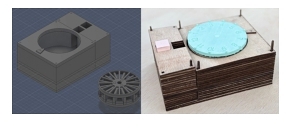
Parse was developed through a Research through Design process across five sequential workshop cohorts. Each cohort informed revisions prior to the next deployment: observations and performance data were consolidated between sessions and used to evaluate whether each module's physical form and interaction flow adequately externalized its target concept. This iterative cycle is itself a core contribution: the design knowledge produced through successive classroom deployments shapes both the final artifacts and our understanding of what tangible AI learning systems require. Module 1 underwent the most significant redesign. In early deployments, two problems emerged simultaneously: the mechanism proved mechanically fragile, and the interaction resolved too quickly, preventing students from developing the systematic search strategy the module was designed to build. The redesign extended the interaction to a two-stage configuration and simplified the mechanical structure. In subsequent cohorts, observers recorded a clear behavioral shift: students began adopting sequential, exhaustive strategies within two to three attempts. Modules 2 and 3 remained structurally stable across cohorts. This redesign illustrates a broadly applicable constraint: the temporal structure of an interaction — how long it sustains engagement before resolving — may be as pedagogically significant as its conceptual mapping.
3.2 Conceptual Mapping
We use feedback-derived learning as an umbrella framing for processes in which a system discovers structure without labeled outputs — encompassing random search, iterative narrowing, and distributional inference as mechanistically distinct but conceptually related challenges. Module 1 externalizes random search: exhaustive exploration of a solution space with no proximity signal [1]. Module 2 externalizes iterative constraint propagation: each solved component reduces the remaining search space, mirroring how iterative algorithms narrow candidate solutions [15]. Module 3 externalizes statistical inference from accumulated evidence: only by tracking outcomes across multiple interactions can learners build a model of the hidden distribution. Module 3 was retained across all cohorts precisely because its divergent outcomes reveal a boundary condition: tangible interaction alone is insufficient when feedback must be accumulated rather than immediately interpreted.
3.3 Module Descriptions
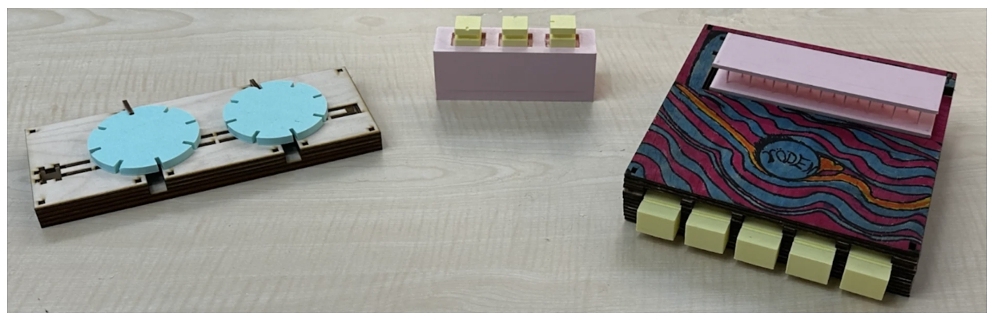
Module 1: Random Search. Design principle: No proximity signal forces exhaustive exploration. The module contains two wheels, each with eight orientations: seven presenting a wall and one open. The learner rotates both wheels, locks them, and drops a ball into the entry hole. If both open paths align, the ball passes through; otherwise the learner retrieves it and tries again. The configuration space is 64 combinations, of which only one permits passage. Because the internal structure is hidden, the learner must explore exhaustively. This interaction reflects how learning systems explore a hypothesis space by systematically evaluating solutions in the absence of guiding feedback, analogous to brute-force or grid search strategies in ML.
Module 2: Iterative Refinement. Design principle: Immediate physical feedback accelerates conceptual grounding. The module contains six cylindrical tubes with unique geometric profiles and six matching rectangular disks. Three tubes are placed inside an enclosure with their profiles hidden. A correct match produces an audible click as the tube seats. Each successful match progressively narrows the solution space. This process parallels how learning systems iteratively eliminate inconsistent hypotheses, progressively narrowing the solution space in a manner similar to constraint satisfaction and version space reduction.
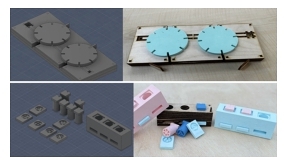
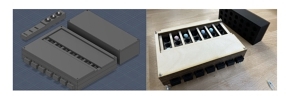
Module 3: Strategic Inference. Design principle: Delayed, distributed feedback requires active model-building. The module contains seven sliding keys, each with three holes and three notches. Three balls are distributed across a hidden grid. Pure guessing produces slow results; tracking which coordinates have yielded balls across rounds builds a progressively more accurate model of the hidden distribution. This interaction reflects how learning systems construct models by aggregating observations over time, analogous to statistical inference and the estimation of underlying data distributions.
4 Findings and Limitation
4.1 Participation and Procedure
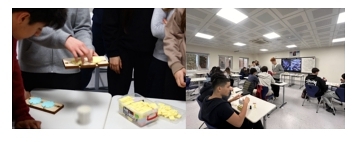
Five sequential workshops were held with 120 middle school students (grades 5–8), in groups of 24 from the same school. Each session lasted 80 minutes: a 10-minute introduction (without disclosing the specific concepts targeted), three module interactions of approximately 15–18 minutes each, and a 10-minute post-workshop survey. Students worked in small groups of two to three and engaged with the modules sequentially, one at a time. Within each group, participants collaboratively explored the interaction, discussing strategies and observations as they attempted to solve each module. Interaction continued until the group reached a solution or demonstrated a stable approach to the task. For instance, during interpreting Module 1, one group initially rotated both wheels randomly, but after repeated failure, a student within the group suggested fixing one wheel and systematically rotating the other, stating ‘we haven't tried all of these yet.’, marking a shift toward systematic search. Systematic search reflects how ML systems explore a hypothesis space by evaluating candidate solutions.
4.2 Data Collection
Two observers independently recorded field notes targeting: initial approach, strategy shifts, reasonings, peer interaction, and time to completion. No formal inter-rater reliability measure was calculated, as observations were qualitative and intended to contextualize survey findings. Pre/post surveys measured self-reported familiarity on a 5-point Likert scale across three target concepts. The post-workshop survey included four multiple-choice assessing whether students could recognize each module's core mechanism in real-life (see Table 1). Results are reported descriptively; no inferential statistics were applied. Since measures rely primarily on self-reported familiarity and a limited number of transfer items, results should be interpreted as indicative rather than conclusive evidence of conceptual understanding.
4.3 Result
Pre/post test responses showed gains across all three target concepts. Module 1 showed the largest shift (median 2.0 to 4.0 on a 5-point Likert scale), Module 2 a moderate gain (2.0 to 3.5), and Module 3 the smallest (2.0 to 3.0). Transfer accuracy followed the same gradient: Module 1 at 82Notes contextualize this pattern. In Module 1, most students shifted from unsystematic to sequential search within two to three attempts. Module 2 produced the most visible engagement: students who accelerated through subsequent attempts, frequently stating that the solution space was shrinking. Module 3 produced the most divergent responses: some students, particularly in grades 7–8, adopted tracking strategies early, while generally all grades persisted with random guessing throughout.
This gradient maps translates a structural difference in feedback type. Modules 1 and 2 provide unambiguous, immediate physical signals. Module 3 requires aggregating outcomes: a fundamentally different cognitive demand. The competitive group format may have chosen rapid guessing over tracking, potentially influencing outcomes independently of the intended feedback, accumulation challenge.
| Elif and Kerem are playing a code-breaking game. There is a secret 3-digit code; each digit can be 1–4 (64 possible codes). Elif enters a guess and the game responds: “Your first digit is correct.” |
| How many possible codes remain for Elif now? |
| A) Still 64 — knowing one digit does not help. |
| B) 60 — One digit was found, so 4 options are gone. |
| C) 16 — first digit is fixed; only second and third remain open. ✓ |
| D) 4 — only the last digit matters now. |
| A robot needs to find the correct door in a building. There are 64 doors and only one leads outside. The robot has no map and receives no signal about which door is closer to the exit. |
| What is the best strategy for the robot? |
| A) Try doors randomly and stop after a few attempts. |
| B) Try every door in order, remembering which ones have been checked. ✓ |
| C) Wait for someone to tell it which door is correct. |
| D) Only try doors that look different from the others. |
4.4 Design Lessons From Iterative Development
The iterative deployment of Parse produced design knowledge beyond what pre/post surveys captured. The redesign of Module 1 illustrates that the temporal structure of an interaction is as pedagogically significant as its conceptual mapping: a module that resolves too quickly does not give learners sufficient time to construct the target inference. Module 2’s immediate auditory feedback produced reliable engagement and rapid conceptual convergence, requiring no redesign. Module 3 remained the most pedagogically challenging across all deployments, suggesting that this difficulty is intrinsic to the concept the module targets (statistical inference) rather than a solvable design problem at this level of scaffolding. Interaction too fast → added second stage → longer engagement.
4.5 Limitations
The convenience sample from a single private school limits generalizability, and between-grade variation introduces developmental differences the study was not designed to disentangle. The iterative design process means not all cohorts interacted with identical module versions; results should be interpreted as directional rather than strictly comparable. Replication in genuinely low-resource contexts would be needed to validate the accessibility claims.
5 Conclusion
This paper presented Parse, a set of three unplugged physical modules designed to externalize core mechanisms of feedback-derived machine learning for middle school students through an iterative Research through Design process. The modules target random search, iterative constraint propagation, and statistical inference from accumulated evidence.
A pilot study with 120 students showed gains across all three target ML concepts, with the strongest gains occurring where feedback was immediate and unambiguous. The iterative deployment process also revealed that physical reliability and temporal interaction structure are critical design constraints in tangible AI learning systems. These findings suggest that unplugged, embodied approaches can extend AI education beyond supervised learning through structured interaction with systems that mirror how learning occurs.
References
- Raphaela V. Bettker, Pedro P. Minini, André G. Pereira, and Marcus Ritt. 2022. Understanding Sample Generation Strategies for Learning Heuristic Functions in Classical Planning. arXiv preprint arXiv:2211.13316 (2022).
- Michelle Carney, Brian Webster, Irene Alvarado, Kate Phillips, Nicky Howell, Jonas Griffith, Jonas Jongejan, Alex Pitaru, and Andy Chen. 2020. Teachable Machine: Approachable Web-Based Tool for Exploring Machine Learning Classification. In Extended Abstracts of the 2020 CHI Conference on Human Factors in Computing Systems(CHI EA ’20). ACM, 1–8. https://doi.org/10.1145/3334480.3382839
- Lorena Casal-Otero, Alejandro Catalá, Carmen Fernández-Morante, Manuel Taboada, Beatriz Cebreiro, and Senén Barro. 2023. AI Literacy in K-12: A Systematic Literature Review. International Journal of STEM Education 10, 1 (2023), 29.
- Christiane Gresse von Wangenheim, Jean C. R. Hauck, Fernando S. Pacheco, and Márcia F. Bertonceli Bueno. 2021. Visual Tools for Teaching Machine Learning in K-12: A Ten-Year Systematic Mapping. Education and Information Technologies 26, 5 (2021), 5733–5778.
- Ken Kahn and Niall Winters. 2021. Constructionism and AI: A History and Possible Futures. British Journal of Educational Technology 52, 3 (2021), 1130–1142.
- Mads H. Kaspersen, Katrine-E. K. Bilstrup, and Marianne G. Petersen. 2021. The Machine Learning Machine: A Tangible User Interface for Teaching Machine Learning. In Proceedings of the Fifteenth International Conference on Tangible, Embedded, and Embodied Interaction(TEI ’21). ACM, Article 19, 12 pages.
- Albrecht Lindner, Stefan Seegerer, and Ralf Romeike. 2019. Unplugged Activities in the Context of AI. In Informatics in Schools: New Ideas in School Informatics(Lecture Notes in Computer Science, Vol. 11913). Springer, 123–135.
- Duri Long, Anuradha Padiyath, Adam Teachey, and Brian Magerko. 2021. The Role of Collaboration, Creativity, and Embodiment in AI Learning Experiences. In Proceedings of the 2021 Creativity and Cognition Conference(C&C ’21). ACM, Article 28, 10 pages.
- Andreas Mühling and Greta Große-Bölting. 2023. Novices’ Conceptions of Machine Learning. Computers and Education: Artificial Intelligence 4 (2023), 100142.
- Yi Song, Xinyu Tian, Nicholas Regatti, Godwin A. Katuka, Kristy Elizabeth Boyer, and Maya Israel. 2024. Artificial Intelligence Unplugged: Designing Unplugged Activities for a Conversational AI Summer Camp. In Proceedings of the 55th ACM Technical Symposium on Computer Science Education V. 1(SIGCSE ’24). ACM, 1272–1278.
- David Touretzky, Christina Gardner-McCune, and Deborah Seehorn. 2023. Machine Learning and the Five Big Ideas in AI. International Journal of Artificial Intelligence in Education 33, 1 (2023), 233–266.
- Paul Virtue. 2021. GANs Unplugged. Proceedings of the AAAI Conference on Artificial Intelligence 35, 17 (2021), 15664–15668.
- Xiang Wan, Xun Zhou, Zhen Ye, Chloe K. Mortensen, and Zhen Bai. 2020. SmileyCluster: Supporting Accessible Machine Learning in K-12 Scientific Discovery. In Proceedings of the Interaction Design and Children Conference(IDC ’20). ACM, 351–362. https://doi.org/10.1145/3392063.3394409
- Skye M. Weisberg and Nora S. Newcombe. 2017. Embodied Cognition and STEM Learning: Overview of a Topic in Education. Cognitive Research: Principles and Implications 2, 1 (2017), 38.
- Wei Xu, Daniel Deutsch, Max Finkelstein, Juraj Juraska, Bei Zhang, Zhiyong Liu, William Yang Wang, Lei Li, and Markus Freitag. 2023. LLMRefine: Pinpointing and Refining Large Language Models via Fine-Grained Actionable Feedback. arXiv preprint arXiv:2311.09336 (2023).

This work is licensed under a Creative Commons Attribution 4.0 International License.
IDC '26, Brighton, United Kingdom
© 2026 Copyright held by the owner/author(s).
ACM ISBN 979-8-4007-2283-7/26/06.
DOI: https://doi.org/10.1145/3773077.3812137