Making Policy Work: Navigating Organisational Inertia Through Participatory Design
DOI: https://doi.org/10.1145/3796624.3796639
PDC 2026 Vol. 1: Participatory Design Conference 2026, Vol. 1: Full Papers, Milan, Italy, June 2026
In this paper, we outline and discuss an event-driven infrastructural approach to policy work in participatory design (PD). Informed by design anthropology (DA), our approach emphasises responsiveness and improvisation through cyclical movements between staged design events and everyday experimentation from within institutional practice. Empirically, the paper draws on a three-year collaboration with midwives in a large hospital maternity ward. We show how emergent local integration of a regional health care policy required iterative collaborative work that surfaced and reconfigured work infrastructures—such as staffing, scheduling, and performance metrics—in close proximity to existing institutional practices. Furthermore, we demonstrate how this approach strengthened midwives’ professional agency and supported the legitimacy of a midwife-led care model within a highly medicalised environment. Contributing to PD for policy, we submit that (making) policy work gains traction when practitioners are engaged not merely as participants, but as infrastructural agents sustaining meaningful integration through everyday work.
ACM Reference Format:
Sissel Olander and Nicky Nedergaard. 2026. Making Policy Work: Navigating Organisational Inertia Through Participatory Design. In Participatory Design Conference 2026, Vol. 1: Full Papers PDC 2026 Vol. 1), June 15-19, 2026, Milan, Italy. ACM, New York, NY, USA, 17 Pages. https://doi.org/10.1145/3796624.3796639
1 Introduction
Participatory design (PD) is increasingly positioned as a means to democratise policymaking processes [4, 12, 18], particularly through diverse public-space “labs” [3]. While sceptical voices note that such labs may reproduce existing power structures [36], they also hold potential to enable multi-stakeholder deliberation that connects policymakers with the views, knowledge, and needs of diverse publics [24, 38, 65]. The growing use of public labs aligns with calls to re-politicize PD's engagement with wider societal challenges [54]. However, the multi-stakeholder focus of many such project set-ups, operating across institutional boundaries and public space [3], risks leaving the lived experiences and everyday practices of professionals affected by policies less of a democratic concern.
Building on PD's ethos, extending beyond instrumental design of or for public policy and services [57, 5], we instead (re)direct attention to the sites and actors engaged in policy implementation amid organisational (resource) constraints and established practices. Through event-driven organisational experimentations, we explore how to rehearse and perform what Pipek and Wulf [52] have conceptualised as “work infrastructures”. That is, with the aim of making policy work, we engage in co-designing the socio-material networks that enable policy to integrate with and thrive in local sites of policy delivery. Thus, as complementary to larger multi-stakeholder constellations, we propose a return to the workplace context within PD as it connects to the Design for Policy (DfP) landscape [4, 37]. This approach engages the unsettled organisational spaces between policy as formulated and policy as realised – that is, between policy in its abstract, declarative, written form and policy as it becomes ‘real’ through ongoing, situated practices of implementation [42, 47]. As we unfold, our suggested framing of PD as making policy work delineates a responsive [2], improvisational, and regenerative engagement strategy that builds on an event-driven approach grounded in a design anthropological disposition [26, 27, 58] and a practice-oriented mode of inquiry [17, 49].
In this paper, we report from a more than three years long project in a large hospital maternity ward, where we collaborate with midwives (and others) to rehearse and perform new practices and procedures that explore and sustain a regional policy initiative on in-house maternity clinics. On this basis, our contribution addresses the call for insights into PD's role in supporting sustainable and inclusive policymaking, and into PD's potential intervention points in policymaking. Specifically, we contribute with insights on how PD may mediate uncertainty in policymaking processes [38] to achieve meaningful and sustained change [31, 55]. We foreground a situated approach that positions PD for policy in continuous confrontation with existing organisational practices, systems, and resources as forces of both inertia and motion. Thus, PD as making policy work becomes a matter of incrementally negotiating and weaving together policy intent and the lived experiences and practices of professionals amid organisational complexity and uncertainty.
1.1 Design and Policy: Uneasy Relations
As noted by political scientist Charles Lindblom more than half a century ago: ‘the policy-making system is not in any regime merely a process that turns out policies.’ [41, pp. 101–2]. While policy-making processes shape society, they are also actively shaped by public preferences and interests. Yet, mainstream understandings often depict policymaking as linear processes in which policymakers identify, clarify, and formulate policy, which is then implemented by public service managers and professionals [32, 42]. Approached from design, however, such temporal and analytical distinctions are challenged by views of iterative interdependencies between policy formulation and implementation [4, 32]. These perspectives see policymaking as entangled in both top-down processes of formulation and bottom-up processes of delivery [42] implying multiple roles for design to play in both up-stream and down-stream processes of policymaking [45]. Thus, in line with this paper's framing of PD as making policy work, policymaking processes extend beyond government or public administration offices and well into sites of policy (service) delivery and back.
Under the broad banner of design for policy (DfP), a growing field of research and practice has, over the past 10–15 years, explored and exploited design in policy domains for both informing policy formulations and supporting their implementation [4]. As illustrated with initiatives like the UK Government's Policy Lab [25], efforts to rethink policymaking through design have mainly been driven by political and public aspirations for more open, inclusive, and citizen informed policy systems [65]. However, despite the proliferation of design practices in public policymaking, the research landscape is still working toward clearly articulating and evidencing design's distinct contributions to policy. Open questions persist about what policymaking entails, how design is understood, and designers’ roles [28, 64], especially beyond popularized “design thinking” [37, 38]. High-level schemas (e.g., Policy Lab's level model building on worldview-based design levels [56] distinguish macro, meso, and micro contributions, yet how knowledge and practice integrate across such levels to yield effective outcomes remains unclear [59].
In a recent report from the AHRC Design|Policy Research Network, Kimbell and colleagues map the design–policy research and practice landscape [37]. In this work, the authors identify three emerging and co-existing positions of design in relation to policy [37, pp. 35-41]. Framed as a research agenda for the DfP field, these positions include: 1) instrumental, 2) improvisational, and 3) regenerative. Each position suggests a different orientation for how design may contribute to policymaking. In the instrumental position, design is treated as a tool for policy. Design thinkers are invited into policy contexts and policymakers are trained to use service and design thinking toolkits [4]. As such, design is approached in a technocratic manner, with a shared worldview based on the knowledge of designers and policymakers. The regenerative position sees design as facilitating re-envisionings of policymaking, decentring dominant assumptions through agonistic probing of underlying worldviews [34]. Finally, the improvisational position frames design as enabling more open, responsive, and adaptive policy-making processes [35, 38]. Here, participatory formats—such as policy or living labs—are emphasized, positioning design as a practice of facilitating processes attuned to unfolding societal events and lived experiences, with policy negotiated among plural worldviews.
While the influence of diverse design practices and interventions on policymaking remains unsettled, these frameworks offer valuable orientations for situating our own position and contribution. In what follows, we engage with the improvisational and regenerative positions [37] as we seek to explore critical questions about where and how PD designer–researchers may intervene in policymaking, and to what ends. However, in contrast to dominant framings of PD as infrastructuring multi-stakeholder relations in policy and innovation labs, we propose an alternative that strives to advance PD in DfP from within organisational and institutional settings.
1.2 Project Infrastructures and Infrastructuring
One key challenge in advancing PD as a practice for more open and responsive policymaking lies in the project formats through which such ambitions are typically pursued. Dedicated project arenas, such as urban living labs [40], public innovation labs [60], and policy labs [46], are frequently designed as ‘islands of experimentation’ [54], based on the idea that innovation emerges by breaking away from bureaucratic routines, established practices, and institutional cultures. These multi-stakeholder platforms are meant to foster collaborative experimentation at arm's length from formal structures, in the hope of equipping policymakers and institutions to respond more effectively to complex societal challenges [24]. While PD researchers may remain critical of the assumptions underpinning these configurations, and of the broader “projectification” of policymaking [22, 23], such formats can be difficult to circumvent. They may surely provide opportunities for cross-sectoral collaboration and allow for local adaptations in methods and focus. However, in practice such multi-stakeholder formats often impose significant constraints on how PD researchers can engage with policymaking in situated, responsive, and improvisatory ways. Seravalli, for instance, has reported from her involvement in a Public Innovation Lab (PIL) aimed at developing new formats for citizen involvement across municipal organisations [55]. She describes how practical constraints, such as limited time among stakeholders and the pressure to spend earmarked funds within fixed deadlines, led to the appointment of project managers unfamiliar with existing municipal routines. This, combined with a lack of ownership among key actors, ultimately undermined the project's ambition of fostering organisational learning. As Seravalli argues, these challenges were rooted in the very structure of the PIL as a project [55, p. 344], because experimentation was framed as an activity separate from the ongoing flow of organisational life.
To make sense of how project infrastructures may hinder or enable the possibility of engaging more closely with existing everyday practices and workflows, it is helpful to briefly consider the concept of infrastructuring as widely used in contemporary PD literature to emphasize the relational, situated, and ongoing nature of design practices [1, 11, 14, 16, 29, 30, 66]. Karasti [33], in her review of infrastructuring in PD, highlights a critical but sometimes overlooked relational link between infrastructuring efforts and the pre-existing so-called installed base; that is, the technological systems and established practices that new initiatives inevitably must adapt to. She notes that the ways researchers engage with the installed base differ significantly across research contexts. Notably, PD approaches that seek to support communities still in formation, as is often the case in dedicated project set-ups and multi-stakeholder constellations, tend to overlook or under-problematize the constraints imposed by existing infrastructures and institutional practices, systems et cetera. These approaches are often oriented towards building new forms of support for emerging communities and publics, which can make existing arrangements seem less relevant or urgent to engage with. In contrast, infrastructuring efforts situated within already established communities are more likely, she contends, to attend to the installed base and its inertia [48].
Karasti's observations are particularly relevant in the context of our work. PD researchers working with communities still in formation, we find, are often explicit about how project framings and structures shape both participation and design in problematic ways. For example, Björgvinsson and colleagues, in their paper Participatory design and democratizing innovation, emphasize how breaking away from the organisation and into the public sphere and the field of innovation research “...is a movement away from ‘projecting’ and towards processes and strategies of ‘infrastructuring’ and ‘thinging’” [9, p. 41]. Like many other PD researchers, they resist operating in accordance with conventional project and innovation logics informed by management science traditions [9, p. 42]. Rather than being uninterested in the installed base, it may be more accurate to say that PD researchers focused on the formation of communities often find themselves entangled in the inertia of project structures themselves. These platforms and their embedded ideas introduce constraints and routines that, in practice, may function much like an installed base. This is one reason we find it important to explore policymaking from within formal organisational settings and existing institutional cultures, as this allows us to engage more directly with the inertia of entrenched routines rather than the constraints of a temporary project setup. Our research thus seeks to adapt to existing procedures so that it is not our project infrastructure that overrides the culture, but everyday practices and rhythms that shape how we can make policy work.
1.3 An Event-driven Methodology and a Design Anthropological Disposition
The project we present draws on third-wave Participatory Design (PD) [57], though in a distinct way. Emerging in the early 2010s, third-wave PD shifted focus beyond formal organisations toward infrastructuring collaborations among citizens, institutions, small businesses, and other stakeholders [9, 16, 21]. It aimed to support emergent social innovation and cultural production [43, 44] by delegating agency to local communities [51] and scaffolding new publics [15], often in contrast to conventional institutional procedures [5, 50]. Against this backdrop, it may seem paradoxical that we align our work with third-wave PD while exploring policymaking from within institutional structures. We do so because our methodological approach follows a particular trajectory within third-wave PD shaped by discussions in design anthropology (DA) [27, 57]. Within the DA tradition, collaborative design events are understood as key to cultivating conditions for moments of actualization to emerge. Informed by science studies and performance theory, such events are staged as a conceptual and material threshold—between what is (e.g. current practices) and what could be (e.g. new practices)—to forge what Richard Schechner has conceptualised as actuals [53]. Analytically framed, actuals are moments when something contestable happens in a ‘here-now’ with irreversible consequences for those involved (53, pp. 26–65). Several design-anthropological projects have worked with this focus. In the DAIM project [27], prototypical enactments of everyday practices were used as sketching tools to explore new waste-handling infrastructures. The method was later formalized as ‘DAIM in a Box’ [27], a toolkit co-developed with the project partner, a public waste company, to train employees and scale beyond the research setting. Likewise, the Senior Interaction Project developed new municipal service models for seniors through recurring public events. Over nine months of project work, researchers and participants co-rehearsed new exercise routines that over the course of the project evolved into a self-organised community.
The event-driven approach to making policy work that we present in this paper grows out of this DA research trajectory. As in the projects cited above, everyday practices also constitute the locus of our inquiry. We engage with practices through collaboratively staged design events, which are purposely designed to (re)frame, rehearse, and prototype new practice configurations. However, our approach also deviates from these earlier projects. Whereas they strived to assemble heterogeneous groups to cultivate new practices from the ground up, we focus on exploring policymaking from within already institutionalized practices. In doing so, our work addresses a central challenge of how to anchor newly rehearsed practices institutionally. As Yndigegn et al. [66] note in their reflection on the Senior Interaction Project, transforming temporary social innovations into enduring routines is often hindered by project milestones, timelines, and other constraints imposed by public project owners and funding schemes [for further discussions on scaling in PD, see also 10].
By drawing on our independent research time, we transpose a design-anthropological disposition and event-driven methodology (back) into organisational settings to explore how PD might engage in policy work from within institutional practices. In some respects, this revisits questions of workplace democracy [8], insofar as we intervene in bounded sites of professional practice. Unlike early PD projects [13, 19, 20, 21], however, our focus is not the design of IT systems. While technologies are deeply embedded in almost any contemporary organisation—especially hospitals—our concern is to rehearse and perform new work infrastructures to pursue policy work from within already institutionalized forms.
2 THE PROJECT: EXPANDING DESIGN FOR POLICY FROM WITHIN
The project we describe in the following commenced in late summer 2022 and is ongoing. It revolves around the revitalization of a so-called in-house clinic within a large, regionally governed hospital maternity ward. First, we retrace the policy framework and debates that led to the (re)introduction of in-house clinics in the region. Then, we describe the situation at the ward at the time when we became involved in the project and were introduced to the model of the in-house clinic. Finally, we offer an overview of the project collaboration by visualising and describing a timeline that shows the different types of events through which the project has unfolded.
2.1 Between Policy Consensus and Professional Disagreement
In 2018, politicians in the Capital Region of Copenhagen decided to introduce in-house maternity clinics within four centralized hospital wards. The aim was to meet the growing demand for uncomplicated births with minimal medical intervention, ease pressure on wards, and improve midwives’ working conditions. Moreover, research showed that fewer interventions in uncomplicated births lead to fewer complications.
The concept of an in-house clinic refers to a midwife-led maternity clinic located inside a hospital ward, modelled on stand-alone birth clinics outside hospitals. Such clinics, whether private or public, are run by independent teams of midwives and provide care for uncomplicated pregnancies and births, including prenatal and postnatal services. As such, they delineate midwives’ legally regulated sphere of autonomous practice from obstetric care, which denotes the specialized medical expertise provided by doctors. By implementing midwife-driven clinical birth environments inside hospital maternity wards, politicians hoped to combine the calm and home-like atmosphere of stand-alone clinics with the safety of immediate access to medical expertise available in hospitals. The first in-house clinics opened at the beginning of 2019.
While consensus had been reached at the regional level in 2018, debates about the allocation of scarce resources, safety, and boundaries between professions emerged, as reported in numerous media outlets around that time [39]. For example, the chair of the National Association of Midwives (in 2018) welcomed the initiative but—recalling earlier and partly failed attempts in the 2000s—warned that without proper staffing and attention to existing workflows, the intended effects would be jeopardized [39]. In practice, earlier clinics had often been absorbed as flexible extensions of the main wards, with midwives pulled back to cover shortages. Consequently, the union stressed that only firm staffing commitments and clear role separation between clinics and wards could prevent a repeat. Obstetricians, for their part, voiced more fundamental concerns about the model itself [61]. In their experience, previous in-house clinics had led to unsafe situations where patients had to be rapidly transferred between the clinic and the main ward, compromising both safety and continuity of care. They cautioned that separating low-risk births from traditional hospital settings could create critical resource strains, dangerous delays in emergencies, and dilution of clinical oversight. Thus, although neither midwives nor obstetricians would likely disagree with the aim of strengthening services for uncomplicated births and improving midwives’ working conditions, the introduction of midwife-led clinics into hospital settings was far from uncontroversial.
2.2 Coming to grips with how things really work
Several years later, in late summer 2022, during an interview we had requested, we were invited by the chief midwife (CMW) of the region's largest maternity unit to explore how PD and DA methodologies might support the revitalization of the hospital's in-house clinic. This meeting became the first in a long series of meetings that developed into a multi-year collaboration with managers and midwives at the ward. A few months on we formulated a project agreement with the CMW and the deputy CMW (DCMW), who later became our main point of contact. We named the project ‘The Future of Midwifery’ to reflect our collective attempt to frame a common agenda. At that time, the in-house clinic was still struggling to gain a stable foothold within the broader organisation of the ward. Access to the clinic depended entirely on whether a sufficiently experienced midwife happened to be available when a woman eligible for an uncomplicated birth process arrived at the ward.
In the beginning of the collaboration, we knew little about midwifery, in-house clinics, or hospital performance metrics. Yet early on we learned that shift coverage overrides everything else in a maternity ward. Shift schedules are planned months in advance by central shift planners to ensure uninterrupted coverage. Each midwife follows an individualised plan that balances ward shifts with other specific responsibilities such as allocated hours for the home-birth scheme, shift supervision, part-time contracts, or consultations. Between 120 and 150 midwives rotate through morning, evening, and night shifts to cover every hour of the year, meaning midwives rarely know in advance whom they will work with and often do not know their colleagues on a given shift. In addition to regular shifts, quarterly staff meetings are organised around mini-teams, coordinated centrally and rotated so all can participate without jeopardizing coverage. The in-house clinic, however, was not integrated into shift planning as a formal area of responsibility, since management could not justify allocating staff to it while the main ward struggled to maintain full coverage. The clinic itself, established in 2019, consisted of three delivery rooms, a small kitchen, and a staff room. It was located down the corridor, about 100 metres from the main ward. Because activity at the clinic was relatively low, midwives sometimes experienced the work as isolated. As the deputy chief midwife described the situation at the time: “Some will say that the in-house maternity clinic has already been implemented, some will say it hasn't. Sure, they have designed some nice delivery rooms, distant from the conventional ward. But it's not a maternity clinic.”
Slowly, through many conversations with midwives, supervisors, health care assistants, obstetricians, and managers, we began to develop a more nuanced understanding of how work differed between the main ward and the in-house clinic. On the ward, midwives worked within larger teams of doctors, nurses, assistants, and other midwives. Surrounded by monitors, call signals, and medical equipment, they could oversee several births at once, often moving quickly between rooms. In the clinic, by contrast, midwifery centred on staying close to the woman in labour—listening, talking, and supporting her through often long stretches of pain. This kind of closeness and continuity was the very rationale for establishing in-house clinics in the first place, yet it was still not always possible in this ward to ensure that women who wished to give birth in the clinic could do so.
2.3 Navigating Socio-Material Constraints, One Event at a Time
Although both management and we gradually turned our attention to how resource allocation and planning systems directly hindered the transformation of the three designated delivery rooms into a functioning clinic, many of the everyday routines and workflows sustaining this infrastructure remained opaque. Thus, a concrete intervention was not obvious. What did emerge was the working hypothesis that without a shielded, dedicated team, the clinic would never truly come to function as a clinic. Still, resources for such a shielded team could not easily be allocated on a regular basis as midwives were continually required to remain flexible to cover the main ward.
Faced with this inertia, we leaned on our event-driven methodology as we quite literally worked from one encounter to the next. Whether an online meeting with the CMW and DCMW, a conversation with a supervising midwife, or a joint meeting with the managing obstetrician, we treated each encounter as an event that could at least potentially strengthen our efforts to establish a well-functioning clinic. Framing the process as a series of interrelated events helped us navigate socio-material constraints while staying focused on our ambition: to reach a point in the process where we could stage and facilitate collective design events. From the earliest meetings to the later highly scripted events, we depended entirely on the commitment of the CMW and DCMW. They gave us access to the ward, set up interviews with midwives and other staff, arranged a field trip to a private clinic, and recruited newly hired midwives with a clinical interest into the project, among other things. Later, as we began running regular collaborative staged design events (workshops), the DCMW's extensive coordination with the scheduling of midwives for workshops months in advance, was critical to the progress of the project.
2.3.1 Phase 1: Exploring the Field (Sept. 2022–Dec.2023). Figure 1 shows a simple retrospective visualisation of our process, more than three years into the project. The first half of the project, roughly the first eighteen months, was characterized by an alternation between on-site fieldwork (FW), design studio meetings (DS), and online exchanges (OE), primarily with the CMW and DCMW. The sequence and frequency of on-site and online events reflected the fact that each activity had to be scheduled from one occasion to the next, depending on what could fit into the busy calendars of our collaborators. These encounters allowed us to gradually build a grounded understanding of midwifery, and the infrastructural elements that held the ward together. At the same time, they enabled us to maintain a continuous dialogue on pertinent issues with our main collaborators. Fieldwork consisted mainly of ethnographic observations and interviews, during which ideas for new directions for the project emerged along the way. Close to all activities were documented through audio and video recordings. Design studios refer mainly to events back at our own institution, where we worked through the material and synthesised both analytical insights and sketched out ideas from the field on our own. Design studios were also conducted on-site in the form of meetings where we co-wrote manuscripts and shot videos used to communicate the project both internally and externally. As the visualisation of the first phase shows, it took over a year before the first workshop could be staged. A severe staff shortage and a hiring freeze made progress toward such events impossible, leaving us to wait for conditions to improve while conducting fieldwork.
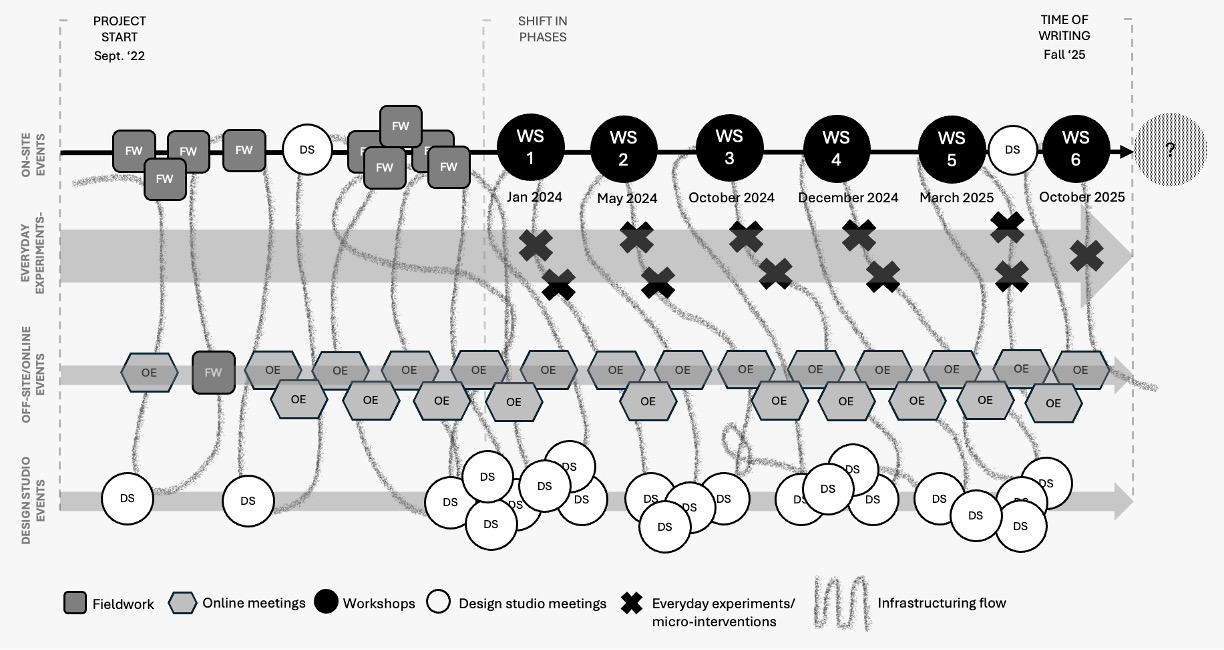
2.3.2 Workshops: Rehearsing New Prototypical Practices (Dec. 2023–October 2025). The second phase, beginning in late 2023, was shaped by a series of sequential design events and marked a shift toward a more structured collaboration. From early 2024, six workshops (WS1–WS6) were conducted, each lasting two to three hours. Before each design event, we reviewed selected ethnographic material and developed formats in design studio meetings, which were then presented to the DCMW in online sessions for feedback and adjustment. Each session began with a shared round of reflections to collectively analyze the issue at hand. From there, we used various forms of scenario techniques to forge negotiations around what could and should be done next to support the clinic. At the end of each session, group agreements were written down to guide try-outs, for example, rehearsals of selected workflow changes, as well as other activities, such as communicating progress in the project to peers at other regional maternity wards. After each workshop, we documented the event and the agreed-upon next steps in a report, which was then circulated among participants (see Figure 2).
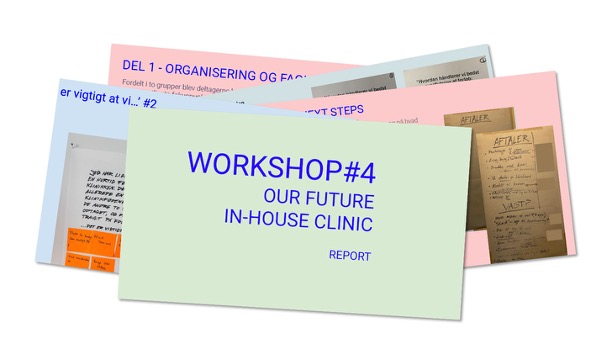
Figure 1 is, of course, a simplified representation of the complexity that characterized the infrastructuring process, but it highlights how we navigated this complexity by scaffolding the work as a series of interconnected events. What it does not fully capture, however, is how the many informal actions and micro-interventions instigated by the DCMW and the midwives in between these staged events cumulatively advanced the process. As they drafted memos, followed up with colleagues, and set up ad hoc meetings along the way, they kept the process alive and in motion. In this sense, much of the infrastructuring work unfolded in the porous space between scripted design events and the unruly everyday life of the ward.
3 FROM REHEARSING NEW PRACTICES TO MAKING POLICY WORK
In what follows, we trace the first three collaborative workshops, and what unfolded in between, to depict the dynamics of the event-driven methodology. We highlight how collective exploration and shift planning unexpectedly brought performance data into focus. The first workshop opened a shared conversation about the clinic's operations, the second staged ‘as-if’ rehearsals of shift coverage co-developed with the central shift planner, and the third turned attention to performance data as registration and evaluation became key tools for legitimising the clinic within the wider organisation.
Taken together, the following accounts illustrate how the project unfolded through an event-driven rhythm that alternated between staged design encounters and everyday experimentation. Rather than treating design events as isolated interventions, we trace how what was initiated in the staged workshops was carried forward through everyday work practices and later re-entered subsequent events. This oscillation between events and practice was central to how infrastructural change gradually took shape.
3.1 Elucidating commitments and Probing Engagements
A year and a half into the project, we finally organised the first collaborative design event in late January 2024. Thanks to the DCMW's careful coordination and tinkering with shift plans months in advance, we succeeded in gathering eight midwives. Our main aim for this first event was to create a shared conversation about the clinic among the interested midwives. We wanted to move from abstract visions to more tangible discussions of what, for the midwives, defines a well-functioning clinic within a hospital setting, while also clarifying how the project itself could progress in practice. The main challenge was the unpredictability of working within a tightly regulated organisation, constantly reshaped by new initiatives and reforms from above. The clinic itself was, in many ways, a product of such top-down policymaking. As a result, it was difficult for the DCMW to make firm promises about the project timeline—particularly regarding resources and the possibility of establishing a shielded clinic team. Against this backdrop, the first event became an occasion to explore whether it would nevertheless be possible to build sustained engagement among the midwives. In this sense, the event functioned less as a forum for decision-making than as a performative probe into whether a shared concern for the future of midwifery could sustain commitment under conditions of organisational uncertainty.
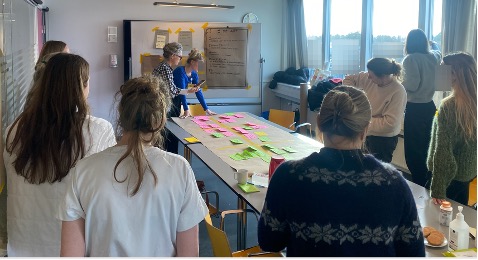
In preparing the event, we selected ethnographic excerpts from our fieldwork: short quotes capturing colleagues’ reflections, such as “It's a great feeling when a colleague pops in and says: ‘Hi, I'm in the other [clinic] room’” or “We don't always understand why a woman in labour ends up in the maternity ward instead of the clinic… how was she welcomed?” For the first group exercise, we asked participants to choose favourite quotes and relate them to their own experience in the clinic. Drawing on these reflections, we then invited them to formulate key points that needed work to support a stronger clinical environment. In a second part, we used scenario techniques to prompt collaborative speculations on what a birth process in the clinic should ideally look like from arrival at the ward to discharge. Building on this discussion, we asked participants to consider how they could support such a pathway, imagining themselves as a dedicated team in the clinic. Each group presented their scenarios, which we filmed (see Figure 3).
In the wrap-up, all midwives expressed enthusiasm for the project, though some also voiced frustration about being reassigned mid-shift from the clinic to the ward. The DCMW, for her part, emphasised that she was not in a position to guarantee dedicated resources for a shielded clinic team. However, she committed to organising a special scheduling arrangement for those who wished to take on more clinic shifts. This, she explained, would allow interested midwives to work in the clinic as much as possible while still covering other essential duties, such as consultations and supervision.
3.1.1 Infrastructuring Through Everyday Workarounds. We left the design event with an unclear sense of how things had landed with the midwives. At this point, we did not yet know when the next workshop could be scheduled. Given staffing conditions and the coordination required, it was likely months away. In the meantime, establishing a special scheduling arrangement proved quite challenging, because shift coverage was managed centrally by a planning unit and secured through recurring rotation schedules set three months in advance. As an improvised workaround, the DCMW introduced a “C” (for Clinic) next to the names of participants from the first workshop, as well as other midwives who had expressed interest in the clinic. These lists were then handed to supervising midwives, responsible for distributing tasks among those on duty. In addition, the DCMW checked in regularly with the supervisors to encourage them to prioritise the “C-marked” midwives for clinic births whenever possible. Although improvised, we observed this change in scheduling practice as an event output that gradually seeped into existing coordination routines, subtly reconfiguring how responsibility for the clinic was distributed in everyday work.
During the following period, interest in the project grew. By May 2024 we were able to set up a second design event with 11 midwives who represented a range of roles, from basic care and consultations to the training of interns and supervisors. More than half had participated in the first design event, but five were new to the project. With this second collaborative design event, we wanted to build on the work the DCMW had already initiated, and to forge a more stable and sustainable system of coverage for the clinic. With the CMW we therefore set up an “as-if” scenario revolving around shift coverage in the clinic, which could form the basis for a later full-scale four week trial period scheduled for September 2024. The scenario format we employed had been co-developed with one of the ward's four central shift planners, who had been recruited by the DCMW for a design studio session prior to the event. The shift planner then joined the event to help facilitate the process.
3.2 Rehearsing Shift Planning
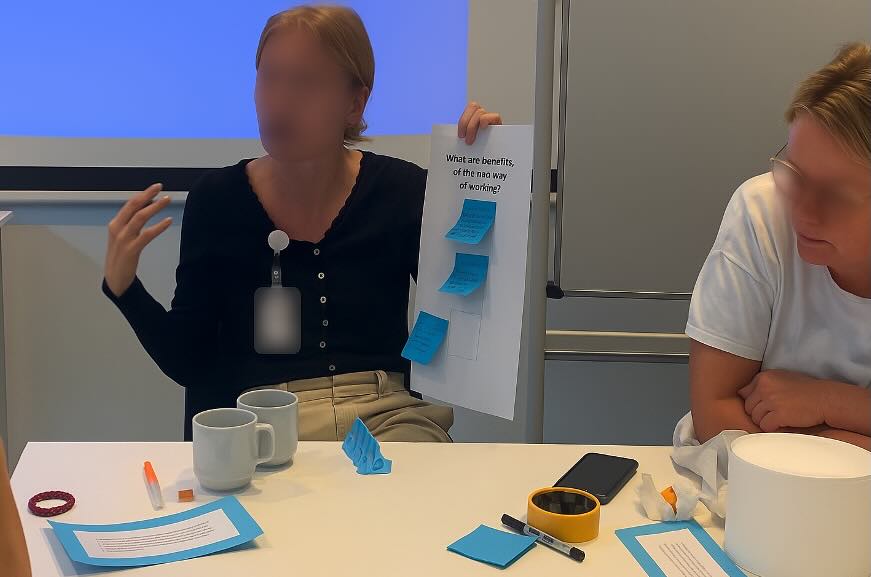
In the absence of additional resources for the clinic, and assuming that tinkering with procedures for shift coverage was the most powerful leverage point for changing conditions on the ground, we focused the design event on one main exercise. Before turning to this, we invited those new to the project to introduce themselves and share their interest in the clinic. As they went around, several midwives expressed appreciation for the DCMW's initiative to mark interested midwives with a “C” in the local shift list, noting that it had increased clinic shifts and sparked a broader curiosity across the ward. We then divided participants into two groups and handed out short quotes from the first design event to bring the newcomers on board, and we invited them to discuss key priorities for strengthening collaboration in the clinic. After sharing in plenary, the DCMW introduced the main exercise. She emphasised that this was a try-out designed to let midwives and management experiment with how clinic coverage could be arranged with the resources currently available and stressed that this would lay the grounds for a real trial period in three months. The shift planner then took over and outlined key regulations in the midwives’ collective union agreement, including shift lengths and mandatory breaks. Next, we asked participants to produce a four week shift schedule (see Figure 4).
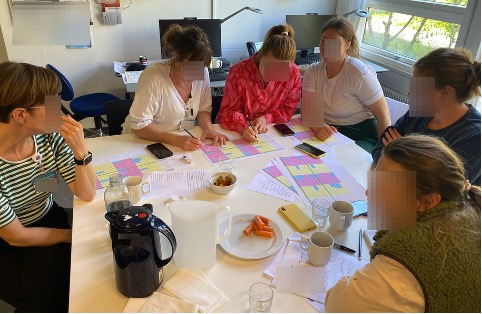
Working on A3 sheets with only the weekend shifts pre-assigned, they had to negotiate the distribution of the remaining shifts while balancing other duties such as consultations, supervision, and training. As the rehearsing of shift planning unfolded, everyone began to grasp the complexity of balancing preferences for day, evening, night, and weekend shifts. They recognised, on the one hand, the flexibility afforded by having a say in the local prioritisation of clinic coverage. On the other hand, they were confronted with the level of commitment required to bring a functioning team at the clinic into being. The following short exchange between two midwives, the DCMW, and the shift planner exemplifies how this played out:
Midwife 1: “Just so everyone knows, I'm not very flexible during the week, but weekends work for me.”
Midwife 2: “Is it possible to schedule 12-hour shifts throughout the weekend then?”
Shift Planner: “Perhaps, but you need to keep track of checks and balances. Longer weekend shifts require compensation elsewhere.”
DCMW: “That is fine, but what matters is that we are clear about when you can and cannot step in. If this is the situation, then how can we still make it work?”
This short excerpt illustrates what we refer to as ‘actuals’ [53] in a design event. Although the exchange took place in an artificially constructed setting, where we explicitly pretended that the group of midwives had full autonomy to plan their shifts, the exercise nonetheless produced real and irreversible effects. Precisely because this staged negotiation on how to assign shifts was closely tied to what came before (the introduction of the C-marked shift plan) and what was to follow (the four week trial in September 2024), negotiations transformed from what could resemble merely playing around into something real.
In the debriefing after the exercise, we discussed key priorities for before and after the upcoming trial, and we distributed related tasks. Several concerns were raised. These included the need to improve the team's communication platform and to strengthen collaboration with the antenatal consultation midwife, which was typically the first to meet women eligible for the clinic. Furthermore, a temporary team coordinator was appointed to monitor the trial period and to explore formats for its evaluation. By the end of the session, we carried a renewed sense of direction. At the same time, fundamental concerns lingered. Decision-making power over resource allocation remained entangled in broader institutional structures, and hospital staffing and ward organisation were subject to ongoing political and managerial shifts. As these conditions were beyond the control of the DCMW, the midwives and us, our joint focus remained to keep momentum and sustain the process, working towards the next possible opening for staging a new event. In this way, the design event did not resolve infrastructural constraints but re-organised how they were collectively navigated in the period leading up to the trial period.
3.3 The Numbers are Wrong
As a direct result of having rehearsed how to cover the clinic “24/7” with at least one team member across day, evening, night, and weekend shifts, a four week full-scale trial was launched in September 2024. Shortly after the summer break, we began looking ahead to the next staged design event, which was scheduled for early October. Throughout September, we stayed in dialogue with the DCMW and the newly appointed team coordinator, who reported that the trial had gone better than expected.
In the larger scheme of the hospital's governance structures, the main barrier to securing additional resources for establishing a dedicated clinic team remained the clinic's low number of completed births. To find a way of evaluating the September trial, the team coordinator adopted an improvisatory approach, comparing birth data from the four week experiment with the same period the previous year. The results were striking: a 50% increase in completed births at the clinic. Furthermore, by manually reviewing all patient records, she discovered that two latency rooms, used for women awaiting initial screening and assessment, had been mistakenly registered as part of the clinic in the hospital's data management system. This had led to an over-registration of transfers from the clinic to the main ward, simply because the latency rooms had no formal systemic connection to the clinic's operations. As the figures were central to the clinic's performance evaluation and hence to future resource allocation, we decided to bring this finding into the upcoming third workshop as a shared point of departure. What had previously been treated as abstract performance data now became an infrastructural concern with implications for the clinic's future legitimacy and resourcing.
The third workshop, which brought together 15 midwives, began with the presentation of the data. Following this, we moved on to the planned evaluation of the four week trial, which included idea generation on how specific midwifery practices, such as techniques for supporting women in prolonged labour, might be shared and developed collectively among the clinic midwives. While the agenda had initially focused on the qualitative experiences of midwives that were now spending considerably more time in the clinic, the revelation of the increased number of births shifted the focus to discussions on how these data could be used to legitimise and strengthen the clinic. Attention also turned to how transfers from the clinic to the conventional ward could be handled more effectively in the future (see Figure 5),as fewer transfers would lead to stronger performance data for the clinic.
The issue of transfers was particularly relevant because the decision to initiate a transfer was always a matter of individual professional judgement. Such critical decisions depended on the midwife's experience with uncomplicated birth processes and her confidence in facilitating birth progress through techniques that allow the body time to prepare for delivery without medical intervention. In terms of data registration, even if a woman had spent many hours labouring in the clinic before being transferred at the last minute, the birth would still be registered as having taken place on the conventional ward. It became clear to the group that maintaining focus on both the procedures for transfers, and on the continued monitoring of data, could potentially be a decisive tool in their future efforts to strengthen the clinic.
In the following months the issue of transfers remained a recurring theme. Midwives began reporting back on individual transfer decisions, and new guidelines for handling transfers in the clinic were established during the following design events 4 and 5. Among these new organising mechanisms was a new rule stating that whenever a midwife was in doubt about a transfer, it was no longer considered sufficient to consult a supervisor by phone. Instead, the supervisor was now required to physically attend to the clinic and assess the situation directly in the delivery room. In addition, the group formulated a collective target to aim for 1,200–1,500 initiated births in the clinic for the coming year. In parallel, a new trial was prepared for March 2025, this time with two midwives providing continuous coverage at the clinic. The model has since been fully implemented, and the number of completed births has already exceeded the initial target as the clinic continues to consolidate its position within the ward's everyday operations.
4 INFRASTRUCTURING POLICY WORK
The PD strategy for making policy work presented in this paper has been driven by an ambition to explore and imagine policy from within the lived realities of those directly affected by it [37]. In doing so, we have sought to bring policy work closer to what Julier and Kimbell describe as “the slow, tricky and political work of implementation” [31, p. 18]. With the title making policy work, we draw attention to the dual movement that has defined our collaboration with managers and midwives at the maternity ward. On the one hand, through collective efforts we have sought to make a regional health care policy work in practice by translating the political ambition of establishing a clinical environment for uncomplicated births into the everyday realities of a highly medicalised and technologically advanced maternity ward. On the other hand, recognising that policymaking rarely unfolds through a simple top-down chain of decisions and implementations [32, 38, 41, 62], what emerged through this collaborative process may itself be understood as policy work.
The in-house clinic project was initiated primarily because midwife management at the ward wanted to challenge and reconfigure the narrowing understandings of midwifery increasingly imposed through medicalised conceptions of birth, care, and safety within the hospital sector. The project was thus born with a distinctly professional-political ambition. Our interest in the collaboration was, at least initially, driven by methodological curiosity, informed by one of the authors’ prior experiences of working with a design anthropological disposition in multi-stakeholder project constellations. Embedded in this methodological orientation was also an explicit democratic ambition—one that inevitably accompanies any participatory engagement.
In this project, we sought to construct a set-up that allowed us to tailor a shared process of exploration and experimentation in sync with the concerns of our direct collaborators and the time and resources available to them. We were able to do so because we relied solely on our independent research time and were not accountable to externally formulated goals, timelines, or standardised evaluation formats. Our set-up can therefore be seen as a response to both the work of Karasti [33] and Yndigegn et al. [66] as we have focused specifically on creating stronger connections between newly rehearsed practices and the institutional and infrastructural conditions already in place.
Although our setting was not one of classical social innovation, but rather a form of policy work as institutional innovation, we nevertheless understand our engagement as a kind of community building. When we entered the field, the midwives interested in reviving the clinic did not, in a Wengerian [63] sense, constitute a strong community of practice. Their responsibilities were dispersed across multiple tasks, their work schedules were highly individualised, and neither a shared vision for the clinic nor a repertoire of shared practices had yet taken form. This remained the case even though both management and midwives were bound together by existing socio-technical systems and institutional infrastructures.
4.1 Improvisational and Regenerative Modes of Policymaking
The approach we present here configures policymaking as something that can be engaged from within institutional settings, gaining its strength by working in the midst of, rather than in isolation from, the bureaucratic routines and institutional constraints that shape policy in practice. As we have described, in-house clinics at regional hospitals were by no means a new phenomenon when the region decided in 2018 to (re)introduce them. When we entered the project, more than three years had passed since the clinic's physical facilities had been established. In that sense, we, as researchers, latched onto existing policy issues that were far from new, although perhaps somewhat dormant.
In our account, we have zoomed in on the scheduling exercise that proved pivotal for the subsequent four week trial, during which one midwife from the team was continuously assigned to the clinic. We have done so to emphasise that our proposal for PD as a practice of improvising within policymaking is regenerative in how it relates to policy work [Kimbell Policy]. The trial prompted the newly appointed team coordinator, tasked with evaluating the process, to manually review all births and transfers from the clinic. This led to the unexpected discovery of inaccurate data, which in turn initiated a series of follow-up actions aimed at strengthening the clinic's everyday operations and legitimacy within the ward. The discovery was not something we could have anticipated or planned for, yet it is equally clear to us and our collaborators that it would hardly have surfaced had we not persisted with this iterative, eventful mode of inquiry.
We have recounted this particular string of actualisations to highlight that, while what unfolds in a scripted design event may appear to concern only minor issues of practical implementation, the event-driven methodology enables such seemingly modest matters to become meaningfully linked to the broader agendas of organisational and professional transformation that our collaborators are invested in. Through this process, data shifted from being something that management and midwives were subjected to, to becoming a tool they could actively employ in their efforts to advocate for the clinic and for midwifery's professional autonomy within the hospital ward. The improvisational character of the approach thus enabled a re-envisioning of professional agency, positioning the midwives within a regenerative mode of policymaking [37, 38], one sustained through local acts of collaboration, care, and adjustment that gradually altered how policy could be worked with from within.
4.2 Infrastructuring Through Cycles of Events and Everyday Practices
In its simplest articulation, the event-driven approach describes a cyclical movement akin to what Binder and colleagues conceptualise as a (co-)design lab [6, 7]. It organises research as an alternating movement between staged events and everyday practice, where participants carry forward what has been initiated (event output) and bring back new insights into subsequent event-encounters. The underlying performative logic of this specific inflection of infrastructuring in PD aims to produce a network of “here-and-now” situations that connect and resonate across staged events and everyday situations so that, over time, the design process moves from shared speculation and envisioning to actual realisation.
Nonetheless, PD researchers pursuing this dynamic tend to place particular emphasis on the potency of the staged collaborative design event itself, as such facilitated encounters are regarded as catalysts carrying a certain degree of irreversibility. However, this presupposes, we argue, that those involved hold more than a fleeting or instrumental interest in what is at stake. This is not to suggest that such commitment cannot be found in multi-stakeholder constellations, but rather to emphasise that the performative logic of an event-driven methodology gains particular traction when processes are organised around issues that are pertinent and meaningful to those directly involved, as was the case in the clinic project, where the shared framing throughout was “the future of midwifery”.
Furthermore, the transformative capacity of the event-driven methodology always rests on the extent to which what is produced within staged events can gradually seep into existing infrastructural arrangements, something that often proves challenging when dedicated project constellations are imposed upon institutional life from the outside [55, 66]. For this reason, throughout the clinic project collaboration we have strived to stage design activities as closely as possible to the existing infrastructural elements and the inertia that characterised the maternity ward at the time.
As a practice of infrastructuring, an event-driven approach shares with anthropology the capacity to move across terrains and concerns. Rather than a discrete method or technique, it is a way of working that continuously adapts to local conditions and relations. Nonetheless, the viability of such a research set-up depends on the labour invested by those directly involved. This was certainly the case in the clinic project, where the DCMW and the team coordinator, together with the collective of midwives, invested considerable time between events to sustain the exploratory work and move the project forward. The importance of this often-unseen labour, we suggest, becomes particularly apparent when working within task-driven organisations focused on day-to-day operations, where time for collective exploration or experimentation is scarce. In such organisational contexts, the very act of gathering around a shared agenda may itself become an event. It is precisely for this reason that we consider organisations built around tightly managed and task-oriented structures to be particularly fertile sites for event-driven research approaches like ours, as in such contexts collaborators emerge not merely as participants in our research or as professionals invited to inform policy development, but as infrastructuring practitioners in their own right.
Acknowledgments
We thank the anonymous reviewers for their valuable comments and the participating midwives, managers, and planners at the maternity ward for their collaboration.
References
- Shana Agid. 2016. “…it's your project, but it's not necessarily your work…”: Infrastructuring, situatedness, and designing relational practice. In Proceedings of the Participatory Design Conference (PDC ’16), Aarhus, Denmark, August 15–19, 2016. ACM. https://doi.org/10.1145/2940299.2940317
- Yoko Akama and Ann Light. 2018. Practices of readiness: Punctuation, poise and the contingencies of participatory design. In Proceedings of the 15th Participatory Design Conference: Full Papers – Volume 1 (PDC ’18), Hasselt and Genk, Belgium, 1–10. ACM. https://doi.org/10.1145/3210586.3210594
- Hans Asenbaum and Frederic Hanusch. 2021. (De)futuring democracy: Labs, playgrounds, and ateliers as democratic innovations. Futures 134, 102836. https://doi.org/10.1016/j.futures.2021.102836
- Christian Bason (Ed.). 2014. Design for policy. Routledge, Abingdon, UK.
- Thomas Binder, Eva Brandt, Pelle Ehn, and Joachim Halse. 2015. Democratic design experiments: Between parliament and laboratory. CoDesign 11, 3–4, 152–165. https://doi.org/10.1080/15710882.2015.1081248
- Thomas Binder and Eva Brandt. 2008. The design: lab as platform in participatory design research. CoDesign 4, 2, 115–129. https://doi.org/10.1080/15710880802117113
- Thomas Binder, Eva Brandt, Joachim Halse, Maria Foverskov, Sissel Olander, and Signe Louise Yndigegn. 2011. Living the (co-)design lab. Nordes 4.
- Gro Bjerknes, Pelle Ehn, and Morten Kyng (Eds.). 1987. Computers and democracy—A Scandinavian challenge. Avebury, Aldershot, UK.
- Erling Björgvinsson, Pelle Ehn, and Per-Anders Hillgren. 2010. Participatory design and “democratizing innovation.” In Proceedings of the 11th Participatory Design Conference (PDC ’10), 41–50. ACM. https://doi.org/10.1145/1900441.1900448
- Claus Bossen, Reem Talhouk, and John Vines. 2025. Scaling participatory design. In Rachel Charlotte Smith, Daria Loi, Heike Winschiers-Theophilus, Liesbeth Huybrechts, and Jesper Simonsen (Eds.), Routledge international handbook of contemporary participatory design. Routledge, London, UK, 27–50. https://doi.org/10.4324/9781003334330-3
- Eva Brandt and Maria Foverskov. 2024. Rehearsing and performing in design and living labs: Situated, relational, and embodied participatory design roles and actions in partnerships. In Participatory Design Conference 2024, Vol. 1: Full Papers (PDC ’24 Vol. 1), August 11–16, 2024, Sibu, Malaysia. ACM, New York, NY, USA, 14 pages. https://doi.org/10.1145/3666094.3666105
- Cara Broadley and Brian Dixon. 2022. Participatory design for democratic innovation: Participation requests and community empowerment in Scotland. Policy Design and Practice 5, 4, 444–465. https://doi.org/10.1080/25741292.2022.2157195
- Susanne Bødker. 1996. Creating conditions for participation: Conflicts and resources in systems design. Human–Computer Interaction 11, 3, 215–236. https://doi.org/10.1207/s15327051hci1103_2
- Simran Chopra, Harvey Patrick Everson, and John Vines. 2024. Infrastructuring value exchange in communities through a boardgame. In Proceedings of the Participatory Design Conference 2024: Full Papers – Volume 1 (PDC ’24), August 11–16, 2024, Sibu, Malaysia. ACM, New York, NY, USA, 41–51. https://doi.org/10.1145/3666094.3666097
- Carl DiSalvo. 2009. Design and the construction of publics. Design Issues 25, 1, 48–63.
- Carl DiSalvo, Andrew Clement, and Volkmar Pipek. 2013. Communities: Participatory design for, with and by communities. In Jesper Simonsen and Toni Robertson (Eds.), Routledge international handbook of participatory design. Routledge, New York, NY, USA, 182–210.
- Brian S. Dixon. 2020. Dewey and design: A pragmatist perspective for design research. Springer Nature, Cham, Switzerland. https://doi.org/10.1007/978-3-030-47471-3
- Brian Dixon, Lynn Sayers McHattie, and Cara Broadley. 2022. The imagination and public participation: A Deweyan perspective on the potential of design innovation and participatory design in policy-making. CoDesign 18, 1, 151–163. https://doi.org/10.1080/15710882.2021.1979588
- Pelle Ehn and Morten Kyng. 1987. The collective resource approach to systems design. In Gro Bjerknes, Pelle Ehn, and Morten Kyng (Eds.), Computers and democracy—A Scandinavian challenge. Avebury, Aldershot, UK, 17–58.
- Pelle Ehn and Morten Kyng. 1991. Cardboard computers: Mocking-it-up or hands-on the future. In Joan Greenbaum and Morten Kyng (Eds.), Design at work: Cooperative design of computer systems. Lawrence Erlbaum Associates, Hillsdale, NJ, USA, 169–196.
- Pelle Ehn, Elisabet M. Nilsson, and Richard Topgaard. 2014. Making futures: Marginal notes on innovation, design, and democracy. MIT Press, London, UK.
- Mats Fred. 2019. Local government projectification in practice: A multiple institutional logic perspective. Local Government Studies 46, 3, 351–370. https://doi.org/10.1080/03003930.2019.1606799
- Mats Fred. 2020. Projectification: The Trojan horse of local government. Doctoral thesis (monograph), Department of Political Science, Lund University, Lund, Sweden.
- Mila Gascó. 2017. Living labs: Implementing open innovation in the public sector. Government Information Quarterly 34, 1, 90–98.
- Government Digital Service. 2020. Open Policy Blog. Retrieved June 18, 2024, from https://openpolicy.blog.gov.uk/
- Wendy Gunn, Ton Otto, and Rachel Charlotte Smith. 2013. Design anthropology: Theory and practice. In Wendy Gunn, Ton Otto, and Rachel Charlotte Smith (Eds.), Design anthropology: Theory and practice. Bloomsbury Academic, London, UK, 1–15.
- Joachim Halse, Eva Brandt, Brendon Clark, and Thomas Binder (Eds.). 2010. Rehearsing the future. The Danish Design School Press, Copenhagen, Denmark.
- Marlies Hermus, Arwin van Buuren, Victor Bekkers, and Ellen Korteland. 2020. Conditions for the institutionalization of policy labs: Do policy labs institutionalize and how? Public Policy and Administration 35, 2, 111–132. https://doi.org/10.1177/0952076718782176
- Per-Anders Hillgren, Anna Seravalli, and Anders Emilson. 2011. Prototyping and infrastructuring in design for social innovation. CoDesign 7, 3–4, 169–183. https://doi.org/10.1080/15710882.2011.630474
- Liesbeth Huybrechts, Maurizio Teli, Joanna Saad-Sulonen, and Mariacristina Sciannamblo. 2025. Collectives and participatory design. In Rachel Charlotte Smith, Daria Loi, Heike Winschiers-Theophilus, Liesbeth Huybrechts, and Jesper Simonsen (Eds.), Routledge international handbook of contemporary participatory design. Oxford: Taylor & Francis.
- Guy Julier and Lucy Kimbell. 2019. Keeping the system going: Social design and the reproduction of inequalities in neoliberal times. Design Issues 35, 4, 12–22.
- Sabine Junginger. 2014. Towards policymaking as designing: Policymaking beyond problem-solving and decision-making. In Christian Bason (Ed.), Design for policy. Gower Publishing, Farnham, UK.
- Helena Karasti. 2014. Infrastructuring in participatory design. In Proceedings of the 13th Participatory Design Conference (PDC ’14), 141–150. ACM.
- Mahmoud Keshavarz and Ramia Mazé. 2013. Design and dissensus: Framing and staging participation in design research. Design Philosophy Papers 11, 1, 7–29.
- Lucy Kimbell. 2019. What if there were more policy futures studios? Journal of Futures Studies 23, 4, 129–136. https://doi.org/10.6531/JFS.201906_23(4).0014
- Lucy Kimbell and Jocelyn Bailey. 2017. Prototyping and the new spirit of policy-making. CoDesign 13, 3, 214–226. https://doi.org/10.1080/15710882.2017.1355003
- Lucy Kimbell, Catherine Durose, Ramia Mazé, and Liz Richardson. 2023. Design and policy: Current debates and future directions for research in the UK: Report of the AHRC Design|Policy Research Network. University of the Arts London, London, UK.
- Lucy Kimbell, Liz Richardson, Ramia Mazé, and Catherine Durose. 2022. Design for public policy: Embracing uncertainty and hybridity in mapping future research. In DRS2022: Bilbao, 25 June–3 July, Dan Lockton, Silvia Lenzi, Pieter Hekkert, Alex Oak, Javier Sádaba, and Peter Lloyd (Eds.). Bilbao, Spain. https://doi.org/10.21606/drs.2022.303
- Anne-Marie Kjeldset. 2018. Fødeklinikker tilbage i Hovedstaden [Birth clinics return in the Capital Region]. Tidsskrift for Jordemødre, 2018(4). Retrieved from https://jordemoderforeningen.dk/tidsskriftsartikel/foedeklinikker-tilbage-i-hovedstaden/
- Annica Kronsell and Dalia Mukhtar-Landgren. 2018. Experimental governance: The role of municipalities in urban living labs. European Planning Studies 26, 5, 988–1007. https://doi.org/10.1080/09654313.2018.1435631
- Charles E. Lindblom. 1968. The policy-making process. Prentice-Hall, Englewood Cliffs, NJ, USA.
- Matt Malpass and Lucy Salinas. 2020. AHRC challenges of the future: Public services. Arts and Humanities Research Council (AHRC), UK.
- Ezio Manzini. 2015. Design, when everybody designs: An introduction to design for social innovation. MIT Press, Cambridge, MA, USA. https://doi.org/10.7551/mitpress/9873.001.0001
- Ezio Manzini and Francesca Rizzo. 2011. Small projects/large changes: Participatory design as an open participated process. CoDesign 7, 3–4, 199–215. https://doi.org/10.1080/15710882.2011.630472
- Ramia Mazé. 2021. Design (govern)mentalities: Implications of design and/as governance in Cape Town. In Michael Erlhoff and Mahret Ifeoma Rezai (Eds.), Design and democracy: Activist thoughts and examples for political empowerment. Birkhäuser, Basel, 13–27.
- Michael McGann, Emma Blomkamp, and Jenny M. Lewis. 2018. The rise of public sector innovation labs: Experiments in design thinking for policy. Policy Sciences 51, 3, 249–267. https://doi.org/10.1007/s11077-018-9315-7
- Nesta and IDEO. 2017. Designing for public services: A practical guide. Design for Europe. Retrieved June 18, 2019, from http://designforeurope.eu/newsopinion/designing-public-services-practical-guide-nesta-ideo
- Laura J. Neumann and Susan Leigh Star. 1996. Making infrastructures: The dream of a common language. In Proceedings of the Participatory Design Conference (PDC ’96), 231–240.
- Davide Nicolini. 2017. Is small the only beautiful? Making sense of ‘large phenomena’ from a practice-based perspective. In Allison Hui, Theodore Schatzki, and Elizabeth Shove (Eds.), The nexus of practices: Connections, constellations, practitioners. Routledge, London, UK, 98–113.
- Sissel Olander. 2014. The network lab: A proposal for design-anthropological experimental set-ups in cultural work and social research. Ph.D. thesis, The Royal Danish Academy of Fine Arts, Schools of Architecture, Design and Conservation, School of Design, Copenhagen, Denmark.
- Sissel Olander, Tau Ulv Lenskjold, Signe Louise Yndigegn, and Maria Foverskov. 2011. Mobilizing for community building and everyday innovation. Interactions 18, 4, 28–32. https://doi.org/10.1145/1978822.1978829
- Volkmar Pipek and Volker Wulf. 2009. Infrastructuring: Toward an integrated perspective on the design and use of information technology. Journal of the Association for Information Systems 10, 5, 447–473. https://doi.org/10.17705/1jais.00195
- Richard Schechner. 1988. Performance theory. Routledge, New York, NY, USA.
- Dimitri Schuurman and Piret Tõnurist. 2017. Innovation in the public sector: Exploring the characteristics and potential of living labs and innovation labs. Technology Innovation Management Review 7, 1, 7–14. https://doi.org/10.22215/timreview/1045
- Anna Seravalli. 2021. In search of (organizational) learning and translation in public innovation labs. In Nordes 2021: Matters of scale, Proceedings of the 9th Nordic Design Research Conference, Kolding, Denmark, August 15–18, 2021. Nordes, 338–347. https://doi.org/10.21606/nordes.2021.37
- Andrea Siodmok. 2017. Designing policy. Open Policy Blog. Retrieved February 3, 2025, from https://openpolicy.blog.gov.uk/2017/09/22/designing-policy/
- Rachel Charlotte Smith, Liesbeth Huybrechts, Heike Winschiers-Theophilus, Daria Loi, and Jesper Simonsen. 2025. Contemporary participatory design: An introduction. In Routledge international handbook of contemporary participatory design. Oxford: Taylor & Francis.
- Rachel Charlotte Smith, Kasper Tang Vangkilde, Mette Gislev Kjærsgaard, Ton Otto, Joachim Halse, and Thomas Binder (Eds.). 2016. Design anthropological futures. Bloomsbury Academic, London, UK.
- Nicholas Spencer and Jocelyn Bailey. 2020. Design for complex situations: Navigating ‘matters of concern’. International Journal of Design 14, 3, 69–83. https://www.ijdesign.org/index.php/IJDesign/article/view/3710/925
- Piret Tõnurist, Rainer Kattel, and Veiko Lember. 2017. Innovation labs in the public sector: What they are and what they do? Public Management Review 19, 10, 1455–1479. https://doi.org/10.1080/14719037.2017.128793
- TV2 Kosmopol. 2024. Forslag om fødeklinikker møder både jubel og kritik [Proposal for birth clinics meets both praise and criticism]. Retrieved September 7, 2024, from https://www.tv2kosmopol.dk/lorryland/forslag-om-fodeklinikker-moder-bade-jubel-og-kritik
- Federico Vaz, Mikko Koria, and Sharon Prendeville. 2022. ‘Design for policy’ from below: Grassroots framing and political negotiation. Policy Design and Practice 5, 4, 410–426. https://doi.org/10.1080/25741292.2022.2141487
- Etienne Wenger. 1998. Communities of practice: Learning, meaning, and identity. Cambridge University Press, Cambridge, UK.
- Anna Whicher. 2020. Public policy: AHRC Design Fellows Challenges of the Future. Arts and Humanities Research Council (AHRC), UK.
- Anna Whicher and Piotr Swiatek. 2022. Rise of the policy designer—lessons from the UK and Latvia. Policy Design and Practice 5, 4, 466–482. https://doi.org/10.1080/25741292.2022.2141488
- Signe Louise Yndigegn, Eva Brandt, Maria Foverskov, and Lone Malmborg. 2022. Scaling social innovation: Ownership, documentation, infrastructuring elements and rehearsing new practices. Artifact 9, 1–2, 22.1–22.26. https://doi.org/10.1386/art_00022_1
Footnote
∗Corresponding author.

This work is licensed under a Creative Commons Attribution 4.0 International License.
PDC 2026 Vol. 1, Milan, Italy
© 2026 Copyright held by the owner/author(s).
ACM ISBN 979-8-4007-2105-2/2026/06
DOI: https://doi.org/10.1145/3796624.3796639